It is heartbreaking when the fabric you bought -bwith so much self-doubt and the potential for looks of disdain from the rest of the family and whatnot – turns out not to be in the prime condition you thought it was! I am not talking about tears, rips, and holes caused by wear and tear, but the problems that are already present in the fabric when you buy it from the bolt. These include weaving and knitting defects like missing threads, broken yarns, slubs, floats, and misweaves, as well as rips, slits, cuts caused during handling, and stains that occur during manufacturing or storage. These are all things you should look out for before spending your money on fabric.
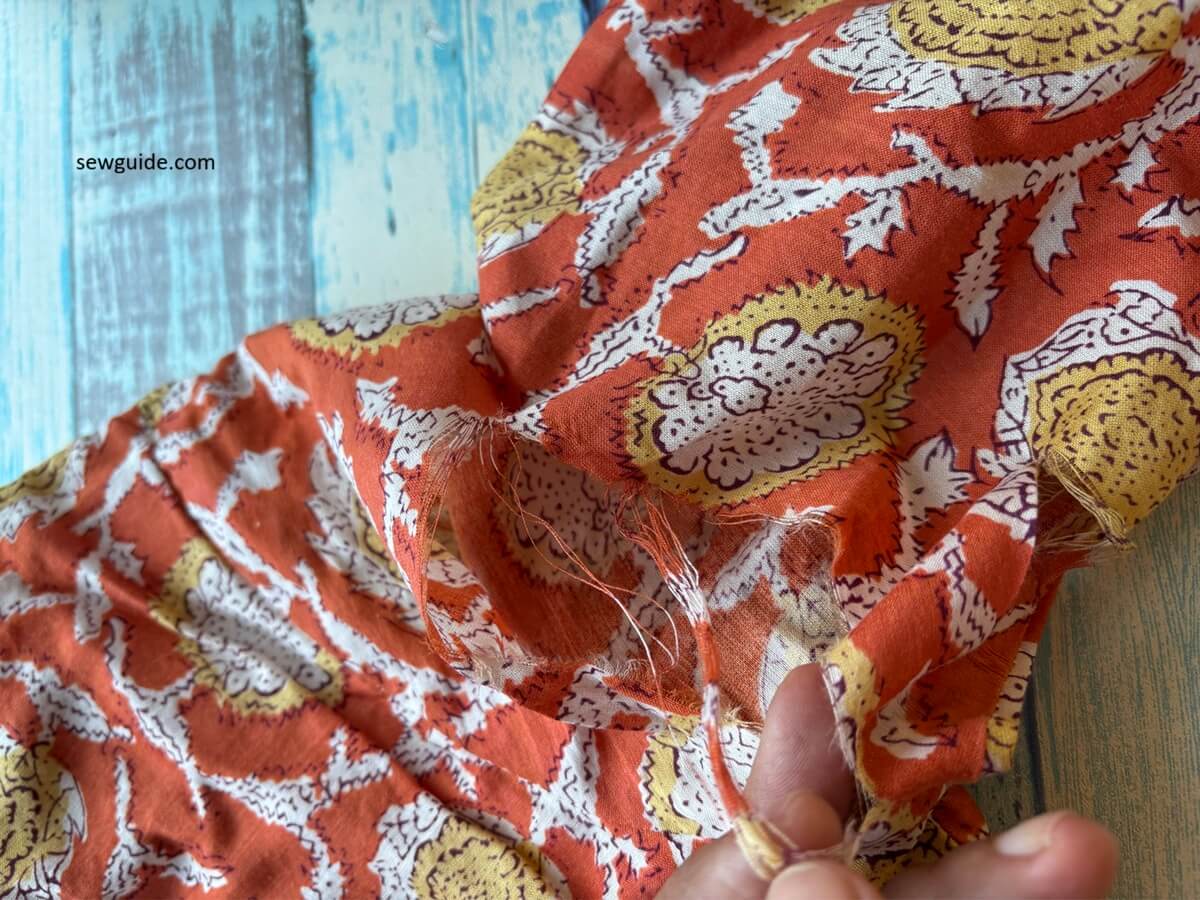
Otherwise, you will end up with a garment like the one below, with the fabric ripping right where it is under strain. It’s an exact sign of poor-quality, weak fabric.
So what should you look out for?
Here is a table. Some things are clear only straight out.
| Fabric | Defects to look out for |
|---|---|
| Cotton | Thin or see-through patches, uneven weave, excessive slubs (unless intentional), loose threads, stains, rough finish |
| Silks | Snags, pulled threads, excessive slubs (unless dupioni or raw silk), water spots, dull patches, broken filaments |
| Linen | Loose or uneven weave, weak spots, broken yarns, excessive lint, holes, stains |
| Wool | Thin areas, bald patches, moth holes, excessive pilling (on new fabric), uneven nap, felted spots |
One thing I am always in doubt with some fabrics are – Am I sewing with the right side of the fabric? If you do not get it right, you will keep wondering what you did wrong with the fabric until you finish sewing and then realize your waste of time and energy and not to mention money.
Related posts : Important properties of fabrics
How do professionals recognize the right side of the fabric
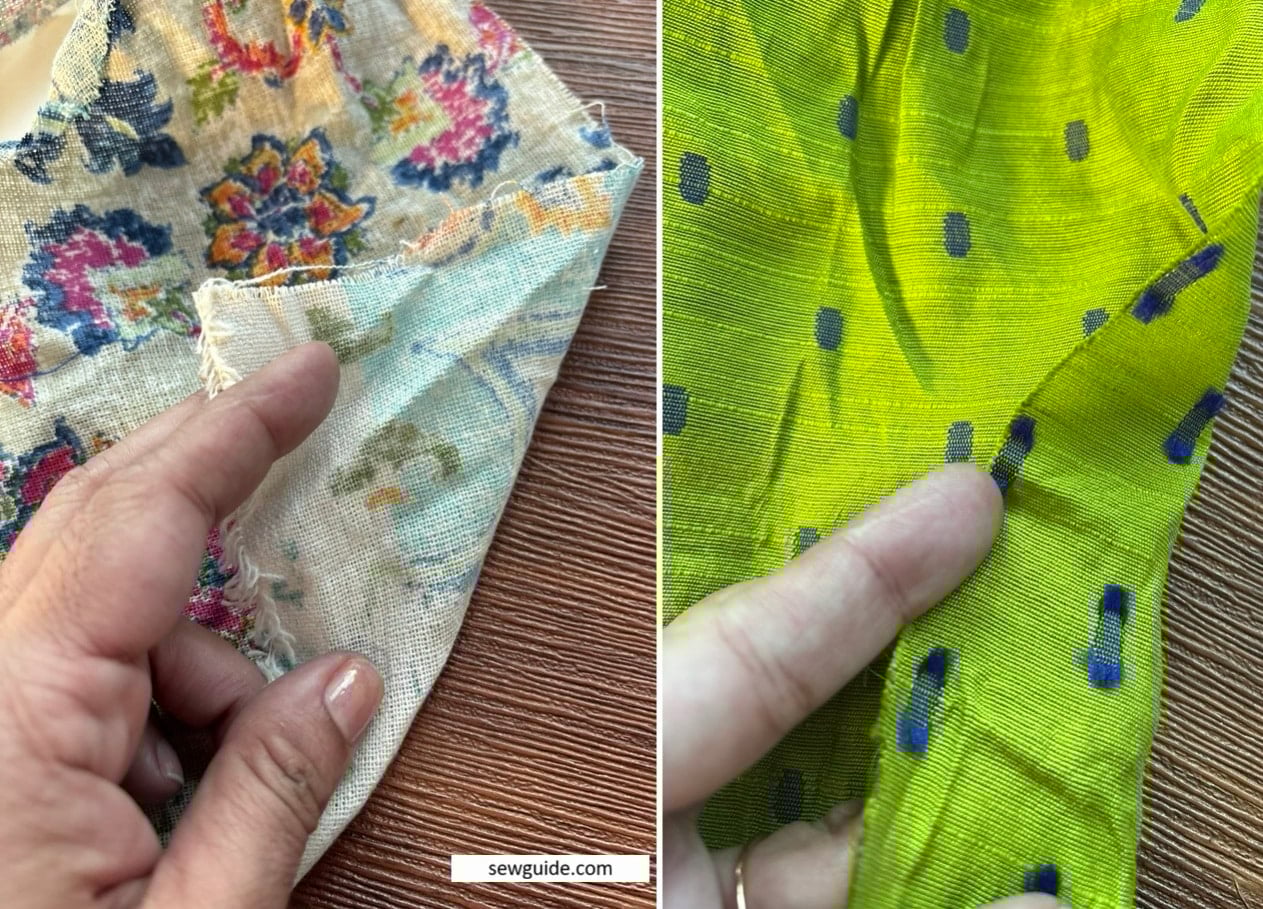
If the fabric is printed you need not go looking for holes in selvage. Just check the prints. Some fabrics may have prints only on the right side of fabric. But some have prints on both sides. The ones with print only on one side are the printed ones. The print can fade fast.
When print is there on both sides, it means that the fabric is yarn dyed.
The printed sides on yarn dyed fabrics may seem identical, but it will be slightly more brighter on the face. (Yarn dyed means the yarn in dyed in the pattern colors before weaving). You will find this fabrics woven in ikat, gingham, and plaid pattern. They are beautiful and really last a long long time.
There are some fabrics which can be used from both sides. These include chambray, linens, double gauze. They will have a right and wrong side as you can see from the selvage. But they can be used either side up.
But as I said there will obviously be a right and wrong side – you can find it by checking the weave. The weave of the fabric will be clearer on one side. When you touch the surface the right side will feel smoother and nice. There is one thing though, you have to consistently use the same side for all pattern pieces.
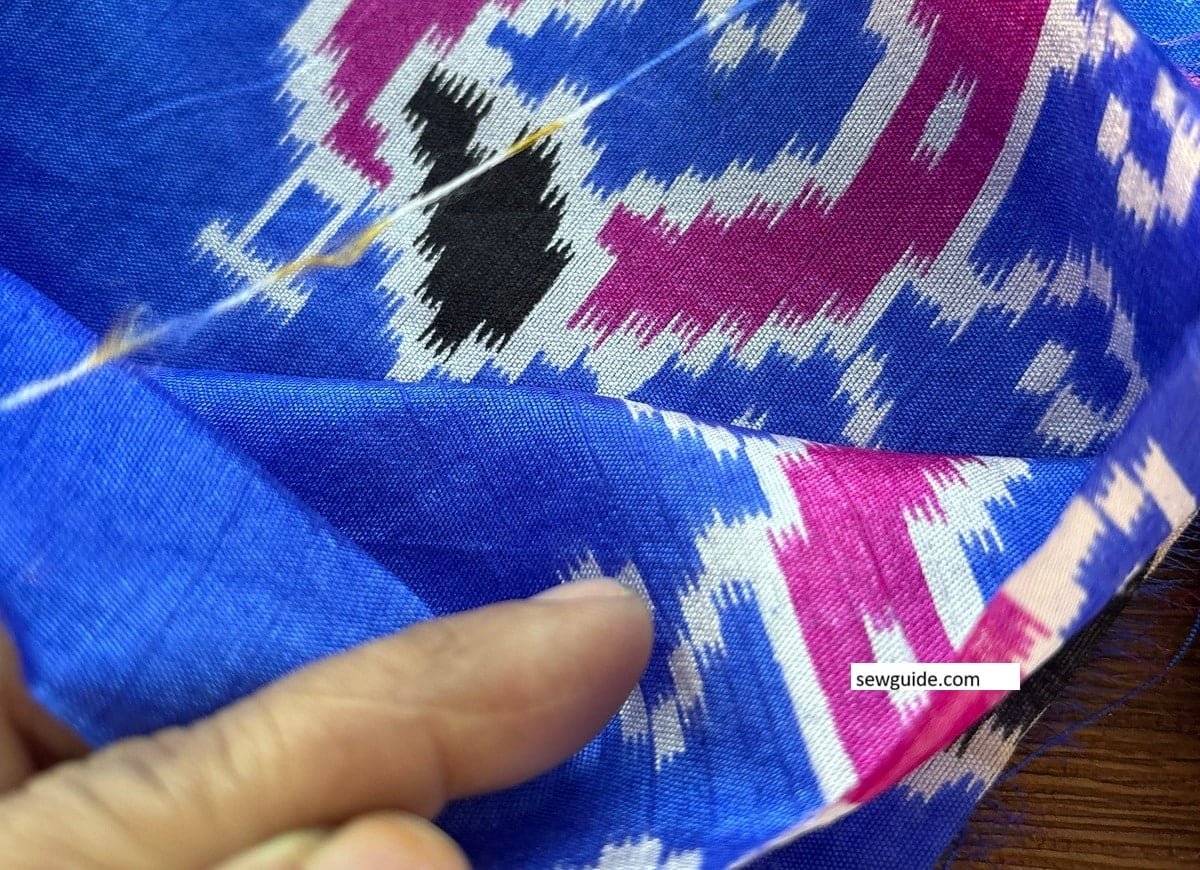
A lot of fabrics need no checking, ofcourse. Very obvious that there is a right and wrong side.
One sure shot way is checking the fabric to see if there are pin holes in the selvage and their orientation.
After the fabric is made, it is then stretched on a frame. Small clips or pins are used to hold the fabric along the selvage to keep it straight and at the right width.
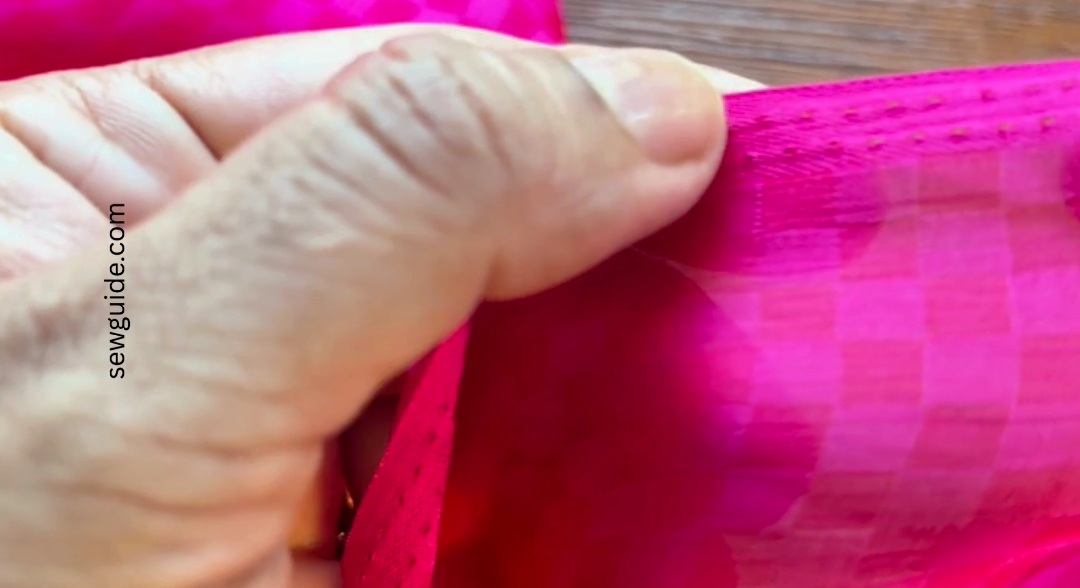
These pins are attached from the frame upwards. And fabric is stretched face side, (or the right side) up. This means that the pinning process creates small holes that protrude on the face of the fabric. The wrong side selvage remains smooth with small holes projecting upwards to the rightside of the fabric.
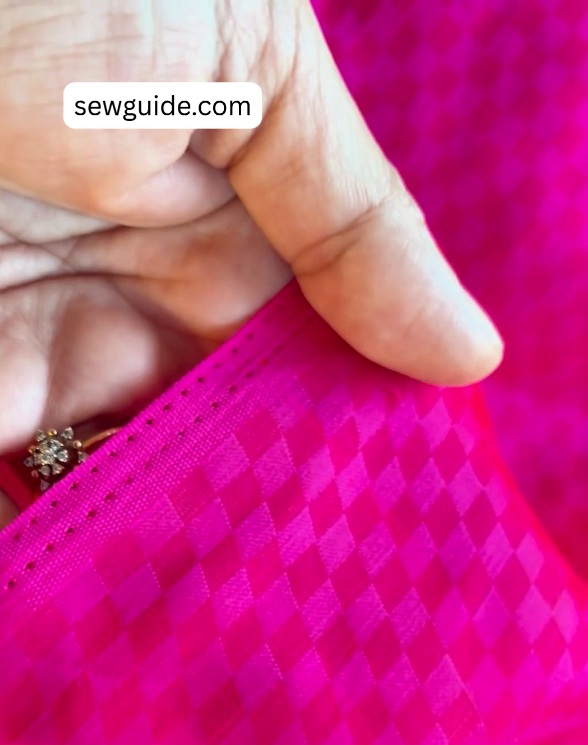
Checkout this video for reference:
List of all the Fabric Defects
Twisted fabric
If your fabric is skewed you are stewed. I mean it. Because it can be very frustrating to sew with it. And the clothing you sew with it will never sit right on your body. Not one pattern will align, especially checks and stripes. Checkered and striped fabrics can look really twisted if you get this type of fabric. The side seam will twist to your front, or back and look unattractive. You must have encountered clothes which hang horribly. They are made with grainline-defective fabrics.
More any other thing, this is what you should look for. If the threads across the fabric is looking diagonally placed instead of straight, do not buy.
Other Fabric defects
When you buy old fabric also called deadstock fabric, you do it with good intentions – you will be saving money and also prevent fabric wastage. But good intentions sometimes may turn out not so good for our project. The worst of all fabric defects can appear in them.
Stains, tears, thin areas are all noticeable when buying. But what about printing errors inside which are not so noticeable. And fabric weaving issues popping up in very inappropriate places if you are not careful
Thick yarn spots
This appears as a thick lump of yarn and are called slubs in textile terminology. In some fabrics it can look attractive like a tussar silk. In fact, experienced sewists sometimes look for slubs as a sign of authenticity. So calling slubs a defect is not the right thing, but if they are very thick and in a very obvious place, it may be an annoyance when you cut the fabric. You may have to buy extra fabric to adjust for it.
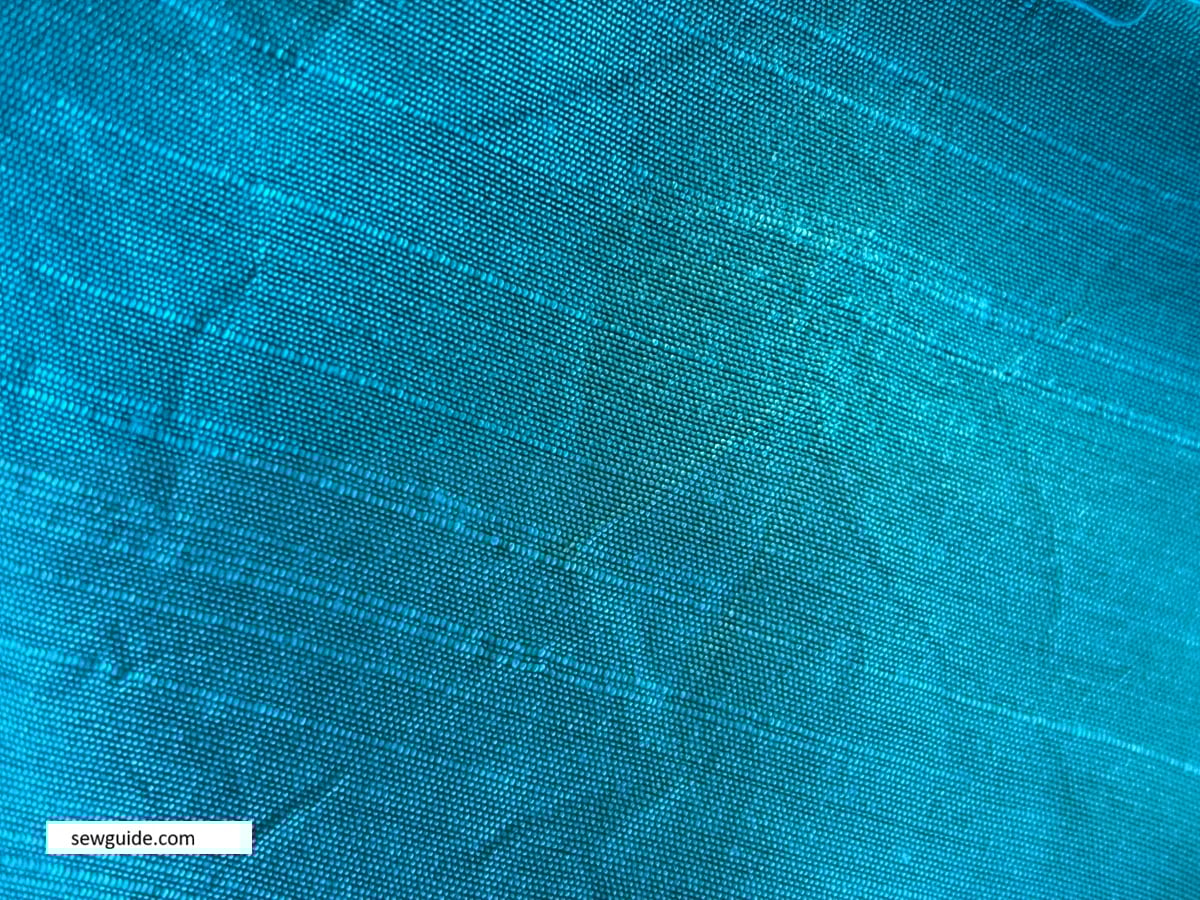
As I said, In some fabrics it is intentionally left so, like a slub cotton, slub linen. It is a result of fiber clumping on yarn and also because of irregular spinning of the yarn. But on fabrics which should be smooth should not have this kind of visible defect.
If the fabric is cheap it can tear along the slubs. Stay away.

Barre
This appears mostly in knit fabrics. It looks like subtle horizontal stripes in a subtly different color than the original fabric, across the width of the fabric. Usually when we go to buy showrooms have very bright lights and it is difficult to spot this defect. You will have to take it out in the sun to check, especially if you are very particular about a no-defect fabric.
Color fading
Usually because of uneven dyeing, this color fading is very unattractive. Unless there is very visible dye streaks these maynot be very visible, unless it is a plain fabric. Unroll and check the fabric carefully under natural sunlight; I would check the whole length.
Crease lines and dirt lines
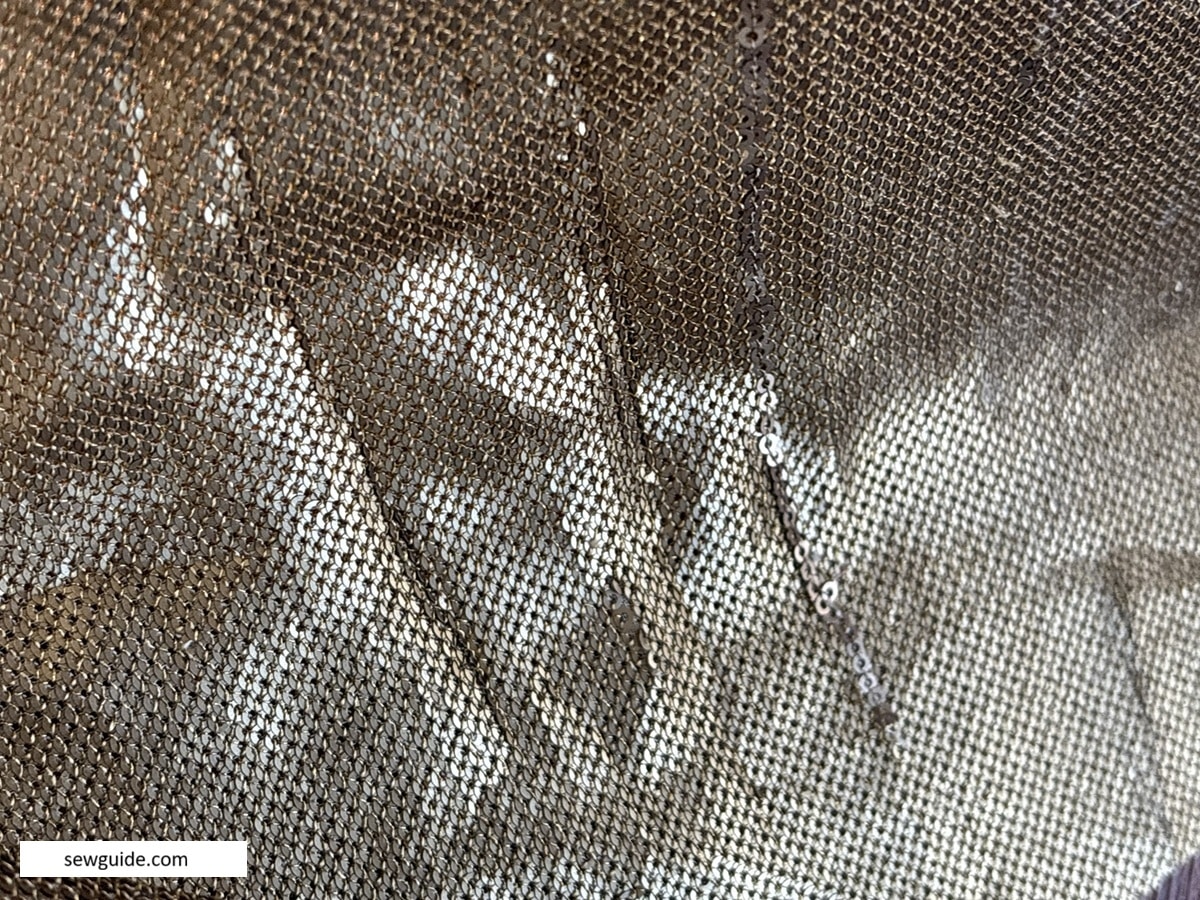
Very common in old stock, when the bolt has been stored for a long time exposed. The sides of the bolt or the crease lines will have a different shade than the rest of the fabric. This will repeat across the fabric, wherever it folded. Sometimes these crease marks may be from the factory. Sometimes they are there because of the way the fabric is stored.
In my experience the color fade is difficult to change, unless it is just dust and it will disappear in the wash.
Tiny missing stitches or holes because of missing yarn
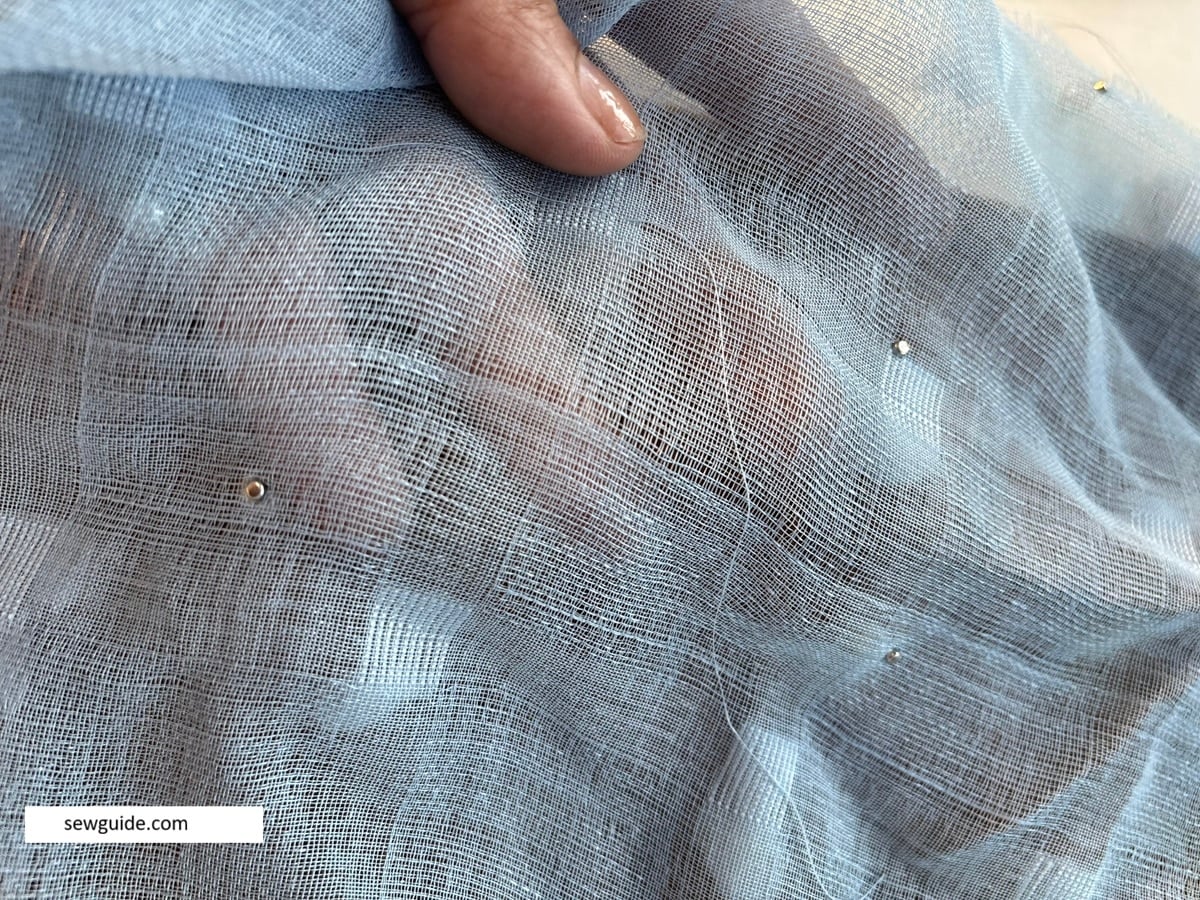
If you find many holes like this or see yarn missing, do not buy – no need to tell you why. These weakens the fabric. The small holes become large once they are washed.
Pilling
You will find this mostly in polyester blends, polyester knits, cheap jersey, acrylic fabric and sweater knits
The best way to find if your fabric will pill or not is to test it with your hands. Just draw your palm over the fabric. If it feels very rough with that fuzzy texture which is more than usual, expect that it will pill more heavily with use. Pilling can make the fabric look like it is used. So I would avoid the fabric. Heavy pilling is a defect in the fabric, and you can buy other fabric of the same type without pilling.
Knowledge is power, and information is… well, I’m not so sure anymore. Because both are useless if you don’t know what to do with them.
In theory, if you see fabric defects, you simply don’t buy it. But sometimes you still end up buying it anyway. Maybe you fell for an online clearance sale with no returns. Or you deliberately buy deadstock, overstock, end-of-bolt, or remnant fabrics — and now you don’t know what to do with them. We fabricaholics have a zillion reasons to buy fabrics.
So when you buy fabric look out for
Holes
Tears, slits, or cuts
Oil, rust, or dye stains
Missing threads or broken yarns
Floats and misweaves
Color inconsistencies
Printing defects (if printed)
Crease marks that don’t disappear
Fabric skew (the weave is noticeably crooked)
Weak areas that tear easily when gently pulled
And, if you already have defective fabric, forgive yourself and think about what you can do with it. Once you know where the defects are, you can place your pattern pieces so they don’t end up in visible areas.
