
When you want the safest, most trustworthy version of something, you usually look for independent third-party certification. The same principle applies to fabrics. You can’t just rely on the marketing claims of fabric stores. Some brands just like that add “organic cotton” to their product descriptions – it is used as a marketing ploy and also to raise price to even double or triple times. Independent certifications can assure you that a textile you want meets your and also the industry standards for chemical safety, environmental impact, and responsible production.
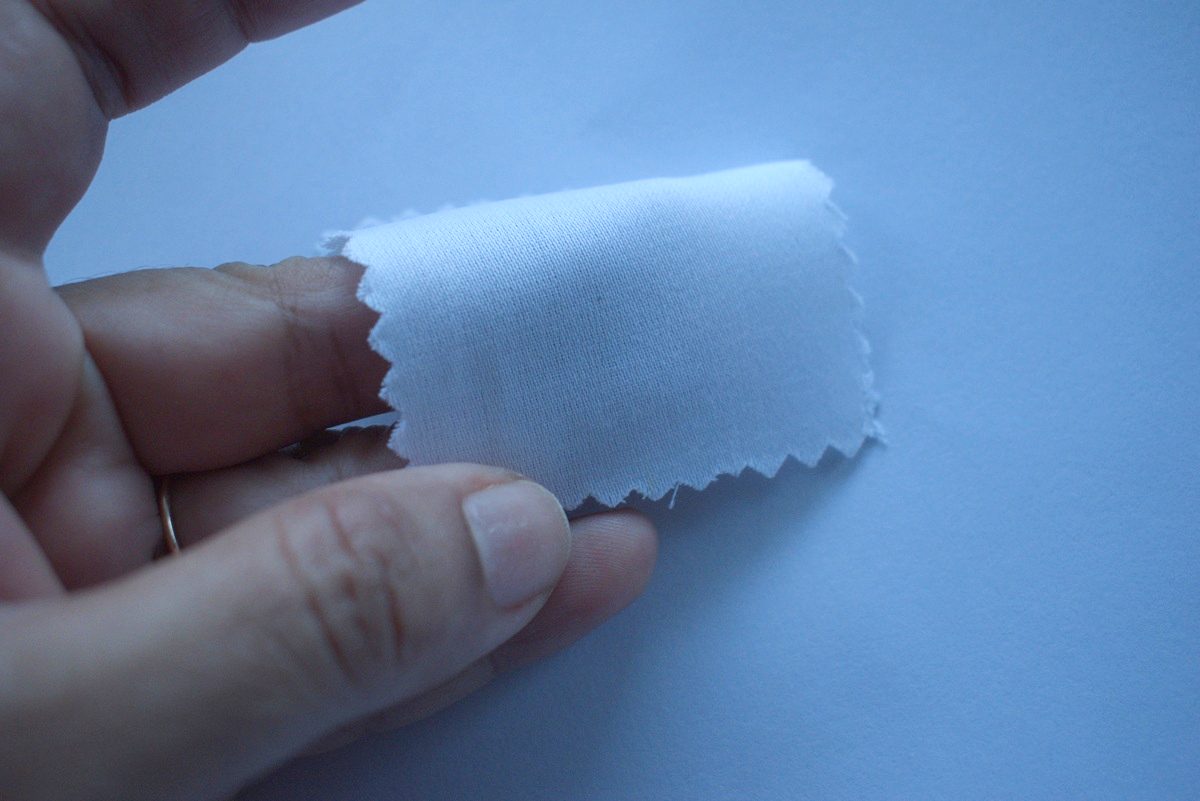
The most internationally acknowledged textile certifications are GOTS (Global Organic Textile Standard) for organic natural fibers ( Cellulosic fibers like organic cotton, hemp, linen), GRS (Global Recycled Standard) for recycled content (Recycled synthetics like rPET, regenerated nylon), and OEKO-TEX Standard 100 for chemical safety.
As you can see, GOTS and GRS are mutually exclusive for natural fabrics and recycled fabrics, so any one type of fabric can have only one of these certifications. OEKO-TEX certifications can be used with either of the two – GOTS and GRS.
These certification marks are awarded based on a number of physical and chemical tests. First and foremost as soon as you see (before buying, definitely) your certified fabric verify that it is authentic.
You need to verify the validity of your fabric certification.
Every GOTS, GRS, and OEKO-TEX certificate carries a unique license or registration number. Enter it into the certifying body’s public database (GOTS’ public database, the Textile Exchange GRS registry, or OEKO-TEX’s “Buy Products” portal). A database match is non-negotiable before you shell out extra money for the fabric.
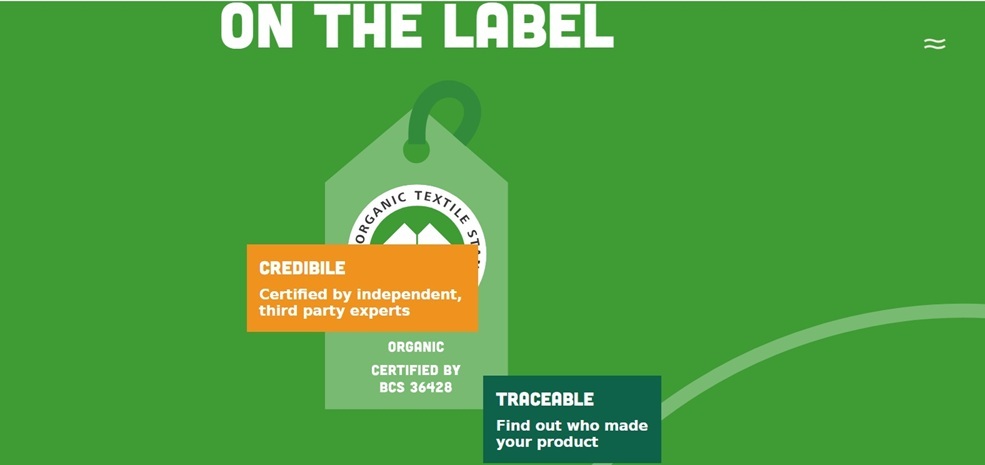
For Gots : Go to GOTS website On this site – search the “Find Suppliers and Products” database for certified entities, location, and product scope ; Find more details here.
GOTS certification (Global Organic Textile Standard)
A GOTS certified cotton fabric will have ≥70% organic fiber content. This certification is considered a very strict certification as it looks at fiber production, processing, dyeing, finishing, environmental criteria, and social standards, so its value is high. The finished cloth is considered safe against skin.
Today, organic fabrics are available in far more options than basic quilting cottons. Common options include organic cotton lawn, organic linen, TENCEL™ lyocell, organic cotton twill, organic denim and hemp canvas. Many are also available with GOTS certification, giving sewists a wide range of choices for everything from lightweight summer garments to structured jackets and hard-wearing workwear.
Organic cellulose fibers are grown without synthetic pesticides, chemical fertilizers and other defoliants. You can easily purchase it as one of the most environmentally conscious fiber choices available.
To achieve certified organic status, cotton must be cultivated on land that has remained free from prohibited chemical treatments for a minimum of three years. This and all its rigorous certification process ensures that your organic fabric is as pure as you want it to be – but it comes with a cost.
Because organic growers rely on crop rotation, beneficial insects, mechanical weed control, and other natural farming methods in place of use of chemical use (which will get rid of the pest problem immediately) the cost is driven up. As a result, certified organic fabrics generally carry a higher price tag. I personally consider this environmental and health benefits worth the investment. But you have to weigh it against your need and the budget.
One thing to keep in mind when buying organic fabrics for children’s sleepwear – it may not be suitable in your country. In some countries, sleepwear has to meet special fire safety rules, and since organic cotton isn’t usually treated with flame-retardant chemicals, it may not always be the best choice for those projects. GOTS-certified fabrics are not treated with conventional flame retardants, because many of the chemicals commonly used for flame resistance are not permitted under the standard. Many manufacturers bypass these problems with construction methods, like making the clothing tight fitting etc.
Certified fabrics often stitch out a little differently from their non-organic counterparts- but don’t let that discourage you. The difference is not so dramatic enough to disappoint; it’s just a little different. Handle them with a little extra care – a test seam, a prewash, a small tension adjustment – and they’ll give you excellent results.
From a sewing perspective, organic fabrics are just like their conventional counterpart but there are some differences.
Many certified organic cotton fabrics undergo fewer chemical finishing treatments than conventional textiles. In my experience, many organic cotton fabrics feel softer and more natural – because of this. They have this softer hand, and slightly higher fiber friction, and less surface stabilization. This can make the fabric feel more natural but also more prone to shifting, wrinkling, or stretching during sewing.
But the difficulty level depends on the fiber. For eg. Organic TENCEL™ lyocell can actually be more difficult to sew than organic cotton because of its low surface friction and tendency to grow on the bias.
In my experience, the greatest adjustment is not in the stitching itself but in fabric preparation.
Pre-washing
You try to cut polyester, acrylic, nylon and even most natural fabrics out of your wardrobe thinking of the chemical overload on them. Polyester and such synthetic fabrics are made as oil byproducts covered in so many chemicals before they reach you. So it is a no brainer to prewash these fabrics to remove these chemicals before you touch them. But that is not the case here – these fabrics have controlled chemicals. With certified and verified organic fabrics prewashing before sewing is a matter of ease in sewing.
Certified fabrics, especially GOTS cotton, are frequently unmercerized and shrink more on first wash than their conventional counterparts. The shrinkage is typical of unmercerized GOTS cotton. Pre-washing is essential because many organic fabrics have not been chemically stabilized against shrinkage. To my surprise I found greater shrinkage during the first laundering cycle compared with conventionally finished fabrics. And it also removes sizing, finishes, dirt, and removes excess dye.
Pressing
Because some organic fabrics are not heavily treated with wrinkle-resistant finishes, accurate pressing becomes even more important for achieving crisp, symmetrical seams.
Wash, press, and stitch a scrap seam first – check that the seam lies flat and symmetrical along the grainline before cutting your garment pieces.
Sewing Tips
Organic cotton, grown without synthetic defoliants, often has slightly more natural wax and shorter staple length than conventionally grown cotton. From what I have read it seems like this can increase surface friction against the needle eye and presser foot sole. Though marginal, it can matter when it comes to sewing a lot, for example if you are a sewing business.
Because many organic fabrics are less heavily finished, seam puckering is more noticeable, making proper tension settings important. For lightweight organic cottons, I recommend reducing presser foot pressure slightly and using a sharp Microtex or Universal needle in sizes 70/10 to 80/12. A stitch length of 2.2–2.5 mm generally gives you a stronger seam without causing puckering.
Organic cotton knits can also exhibit more natural seam elasticity than heavily processed conventional knits. Stabilizing shoulder seams with cotton tape or lightweight interfacing helps prevent distortion over time.
Despite the higher cost, Professional garment makers often appreciate organic fabrics because they reveal the true characteristics of the fiber. While they may require a little more attention during cutting, pressing, and stabilization, their customers would appreciate their fabric choice which will be authentic, breathable, and comfortable to wear.
Even with all the advantages of Organic fabrics, quality can vary significantly depending on the weave, finishing processes, and fabric weight.
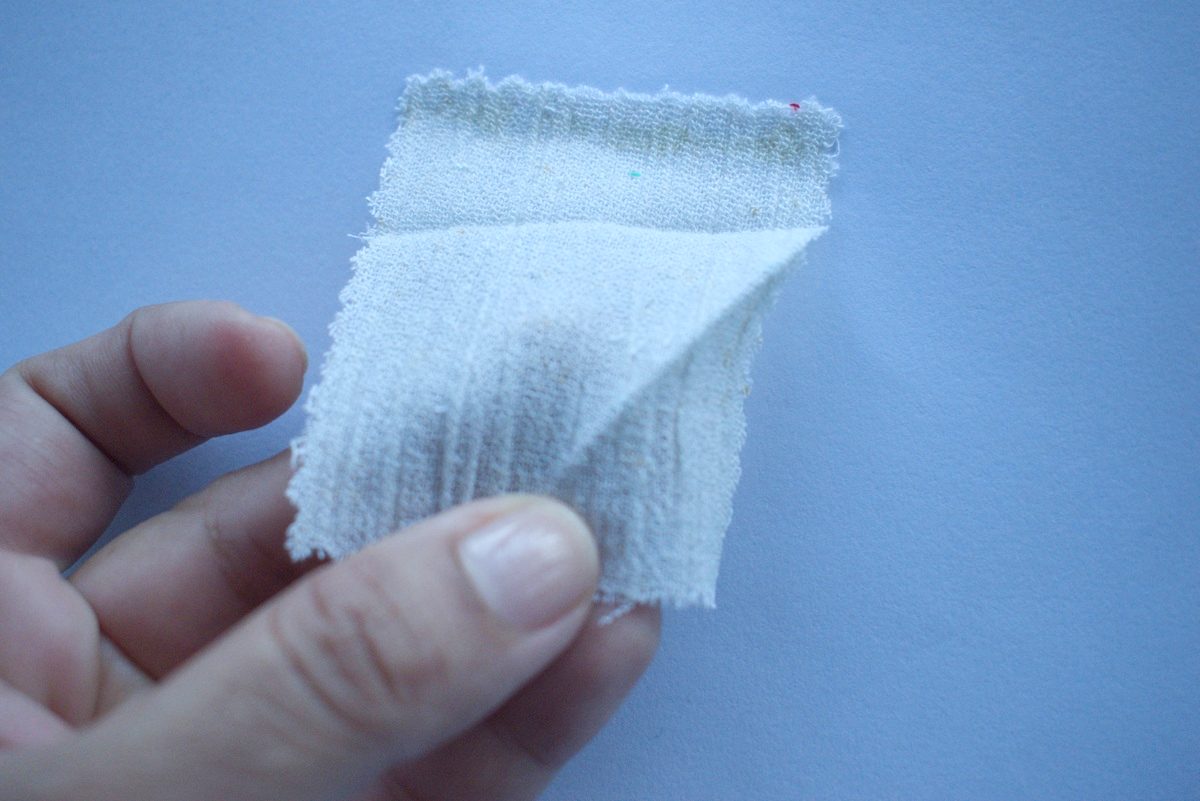
GOTS only certifies organic virgin fiber from agricultural production (organic cotton, organic wool from certified farms, etc.) so synthetic fabrics will need another certification. And that is GRS.
GRS (Global Recycled Standard)
GRS certification verifies recycled content in a fabric. A fabric is given this certification if it has ≥20% recycled material (50%+ for full product claim). Recycled polyester (rPET), is mechanically reprocessed from chip or flake – the extrusion process can leave fiber cross-sections less uniform than virgin polyester. This will change how the thread tracks through woven yarns and can affect seam elasticity in knits.
Recycled wool and Poly jersey (rPET) is a commonly available GRS certified material.
The mechanically recycled poly sometimes runs slightly stiffer than virgin polyester fabric.
Get more details for this textile certification in the official website Textileexchange.org . But for verifying the fabric you have – GRS doesn’t have its own independent verification portal the way GOTS and OEKO-TEX do. Many independant agencies issues GRS certificates.
OEKO-TEX Standard 100
This certification is for chemical safety of the fabric; it checks for residual dye, formaldehyde, heavy metals – the certification you check for if you are looking for fabrics that are safe for your health.
This is a very common certification, across the board. But you have to be aware that it says nothing about fiber origin or labor.
As per the documentations, you have to buy class 1 fabrics for baby clothes. The OEKO TEX standard class 2 and above have higher allowable residuals limit and may not be suitable for kids wear.
Find more details about this certification on the official website oeko-tex.com. Use the “Label Check” or “Verification” section on the site – enter the identification number from the label to confirm validity, the holding company, and the specific standard met.
bluesign®
This certification is given to fabrics at its origin itself – how responsibly the fabric was processed, instead of where the fiber came from. It is not judging the fiber in isolation – it is looking at its origin story- how the fiber is made into fabric. You’ll mostly see it on technical and performance fabrics – things like ripstop, softshell, and technical nylon – because these are usually synthetic fabrics that can’t qualify for GOTS (organic) or GRS (recycled)
It’s a certification for the factory, not the fabric itself. It checks that the chemicals and dyes used in making the fabric are safe – for workers, for the environment, and for water usage at the mill. Only factories that use approved chemical suppliers can earn this certification.
Certifications verify origin and chemical safety – they tell you nothing about the suitabililty of the fabric – this, whether organic or non organic, depends on the weave, and thread count (weave density). So in choosing the fabric it is a matter of life and death, that is all. 🙂 A beautifully certified fabric in the wrong weight will still pucker, drape wrong, or fail at the seam.
The bluesign System Partner List (published as a downloadable resource) lists certified manufacturers, brands, and chemical suppliers. Find more details on the website of bluesign®
In USA the fibers have to get the seal of approval from the governemtal body and display the USDA organic seal if they are sold as organic – checkout the documentation here. According to the website of USDA, Products sold, labeled, or represented as organic must have at least 95 percent certified organic content. Please note that this is about fiber and not for fabrics. GOTS is recognised by USDA.
Related posts : See our full list of eco-friendly fabric options ; Organic cotton fiber properties and sewing behavior
