

I love Rayon – that is, to see it and wear it. It is soft, lustrous and beautiful. It drapes nicely on the body. But on my home sewing machine, it is, at times, a little frustrating. Missed stitches, frayed seams and difficulty in interfacing are all some of the problems.

Rayon is a manufactured fabric made out of natural fibers. Today a lot of clothes are made of this soft drapey fabric in its different forms – be it under names like viscose, modal, lyocell or rayon itself. They respond badly to high temperature, high agitation and sometimes even to water. Sewing with rayon can be as challenging.
But the following precautions can help you to complete beautiful sewn products with rayon. These tips are applicable to all types of rayon fabric – 100% rayon woven material or knit fabrics (Rayon jersey) as well as the blends (Rayon/lycra blends are the most common)

Related posts: Other names for Rayon fabric ; How to wash Rayon clothes; How is Rayon fabric made
☝Prewash Rayon fabric
Before sewing the rayon has to be prewashed to prevent shrinkage later. Prewash in cold water in delicate cycle; But do not dry in the machine. High heat inside a dryer can damage the fabric. It is better to line dry flat.
☝ Select suitable patterns
Making loose flowy clothes is preferable to tailored structured clothes when sewing with Rayon. Rayon is a soft drapey fabric that can make flowy, soft blouses, maxi dresses, long skirts, and flared casual pants.
Rayon Ponte knit (Rayon / Nylon / Spandex), Rayon double knit, Rayon Jersey knit ( Rayon/Lycra), and Rayon-poly blend (Rayon/Poly/Lycra) are all stretchy rayon fabrics, which make good dressmaking fabrics.
These are all stretchy byt may not be suitable for super tight-fitting clothes. But you can make moderately form-fitting clothes with these fabrics. Printed rayon jersey knits are one of the most pretty fabrics for dressmaking.
☝ Select the correct sewing machine Needle
Rayon Viscose
PropertiesWeight: 110-150 GSM. Thickness: Light. Drape: Ultra-fluid and breathable; lacks structural stability when wet.
Sewing DetailsNeedle: 70/10 HJ or Sharp. Interfacing: Lightweight woven fusible. Mandatory pre-wash required due to high shrinkage.
Tencel (Lyocell)
PropertiesWeight: 150-200 GSM. Thickness: Medium-light. Drape: Heavy, silky drape. More wrinkle-resistant and stronger than standard viscose.
Sewing DetailsNeedle: 80/12 Microtex. Interfacing: Soft tricot fusible. Use low heat and a press cloth to avoid creating a permanent shine.
Modal
PropertiesWeight: 120-180 GSM. Thickness: Thin. Drape: Famous for a “liquid” feel and exceptional softness. Resistant to fading and pilling.
Sewing DetailsNeedle: 70/10 Ballpoint. Interfacing: Sheer tricot. Very slippery; use micro-serrated pins or clips during construction.
Cupro (Bemberg)
PropertiesWeight: 60-100 GSM. Thickness: Very Thin. Drape: Silk-like sheen and weight; anti-static and highly breathable.
Sewing DetailsNeedle: 60/8 or 70/10 Microtex. Interfacing: Ultra-sheer. Prone to fraying; use French seams for a professional finish.
Rayon / Lycra Jersey
PropertiesWeight: 180-220 GSM. Thickness: Thin/Fine. Drape: Soft, cool, and extremely elastic with excellent snap-back recovery.
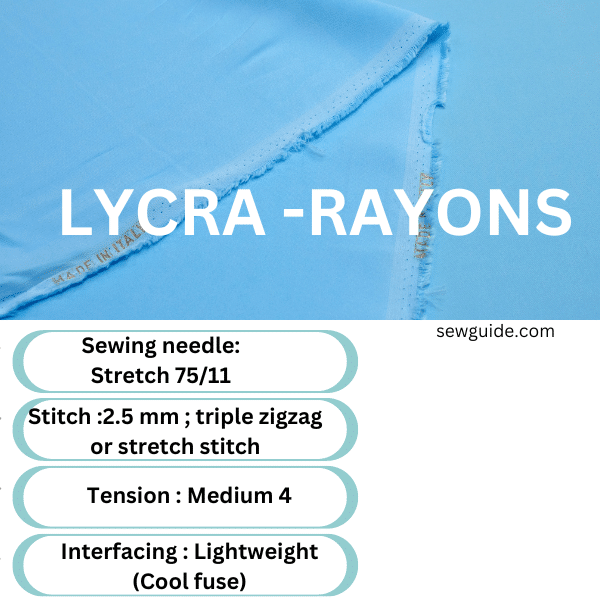
Sewing DetailsNeedle: 75/11 Stretch. Interfacing: Knit stay tape. Use a walking foot to prevent the fabric from stretching under the needle.
Doubleknit Rayon
PropertiesWeight: 250-350 GSM. Thickness: Substantial. Drape: Stable with moderate drape. Holds shape well for structured garments.
Sewing DetailsNeedle: 80/12 or 90/14 Ballpoint. Interfacing: Mid-weight knit fusible. Easiest rayon to sew; handles similarly to a woven fabric.
ITY Jersey
PropertiesWeight: 180-250 GSM. Thickness: Mid-weight. Drape: Slinky and heavy drape. The twisted yarn makes it highly wrinkle-resistant.
Sewing DetailsNeedle: 80/12 Stretch. Interfacing: Lightweight knit tricot. Ideal for wrap dresses and travel-friendly apparel.
Matte Jersey
PropertiesWeight: 150-200 GSM. Thickness: Very Thin. Drape: Exceptionally bouncy with a dull finish. Very fluid movement.
Sewing DetailsNeedle: 70/10 Stretch. Interfacing: Sheer tricot. Use a narrow zigzag stitch to accommodate the high bounce and stretch.
Bamboo Rayon
PropertiesWeight: 150-220 GSM. Thickness: Medium. Drape: Bouncy, heavy drape; antimicrobial and highly moisture-wicking.
Sewing DetailsNeedle: 70/10 or 80/12 Ballpoint. Interfacing: Knit stay tape. Always support the fabric weight so it doesn’t drag during sewing.
Rayon Challis
PropertiesWeight: 100-140 GSM. Thickness: Thin (Woven). Drape: Softer and more breathable than cotton; very high graceful drape.
Sewing DetailsNeedle: 70/10 HJ Sharp. Interfacing: Sheer tricot. Shifts easily during cutting; use pattern weights and a rotary cutter.
Rayon Crepe
PropertiesWeight: 120-160 GSM. Thickness: Medium-light. Drape: Textured pebbly surface with springy drape. Very elegant finish.
Sewing DetailsNeedle: 70/10 HJ Sharp. Interfacing: Lightweight woven. Avoid excessive steam to prevent temporary fabric contraction.
RPL Blend
PropertiesWeight: 200-300 GSM. Thickness: Medium. Drape: Crisp and structured. Combines rayon’s drape with polyester’s durability.
Sewing DetailsNeedle: 80/12 Universal. Interfacing: Mid-weight woven fusible. Excellent for tailored trousers and workwear.
Use 11/75 or 12/80 sharp/universal needles for all woven rayons.
For knit rayons or rayons with lycra, use stretch needles.
Start with a new needle every time you start a new project in rayon. ie if you want smooth stitching.
☝ Sew the seams correctly
You can sew plain seams on rayon with the straight stitch, but as the fabric is prone to damage easily, it is better if you can use something to reinforce the seam – use a piece of interfacing along the seamline to strengthen the seam.
For stretchy rayon (rayon-lycra/spandex blends) you have to use zig zag stitch or stretch stitch.
☝ Stabilize rayon for sewing
Rayon is a soft fabric and needs to be stabilised with some interfacing if you want some body and strength.
I always interface rayon with rayon itself, whenever possible. If any other fusible interfacing is applied the rayon behaves badly, becoming stiff where the interfacing is applied, where as, the rest of the fabric looks loose and drapey. So using the same fabric as interfacing works as a solution.
If you do not have enough to use as interfacing you can use thin knit fabric (thin knit tricot) or silk organza, cotton batiste or cotton organdy.
Stabilise seams with interfacing tape.
You may want to add some interfacing tape to hems with rayon so that they stay flat.
☝ Deal with shrinkage of rayon
Shrinkage of fibers is a problem with Rayon, prewash the fabric or so leave more seam allowance than you normally would. Buy more fabric than you think you need. Give allowance for shrinkage when cutting especially if you are not prewashing the fabric.
There will be progressive shrinkage with washing so take that into account. Or be determined to drywash forever which will retain the shape and size of the garment.
☝ Leave enough seam allowance
Rayon fibers do not have natural stretch and recovery, hence high movement areas like elbows, knees and seams stretch and damage the fibers there. So you may need to give more ease and seam allowance there.
☝ Press with low heat
You will need to press as you sew but high heat can damage rayon fibers. Use low heat. And when you need to apply more heat, use a pressing cloth in between the fabric and the iron.
Related posts : How to sew with satin fabrics; How to sew with silk fabrics; How to sew with wool fabrics.


