
Most people with heavy thighs have a problem finding clothes, especially jeans that fit them—the reason is not you, but the standardization of clothing. When companies make clothes, they make them based on a base pattern and this is then graded up and down to scale the sizes proportionately. Pattern grading assumes one shape; You have a unique shape and size.
So when you do not fall into these standard sizes, you have a problem (and several more). Most jean-fitting problems for large thighs can be traced to five areas: waistband gaping, plumber’s gap, crotch stress, pocket flare, and inner-thigh strain.
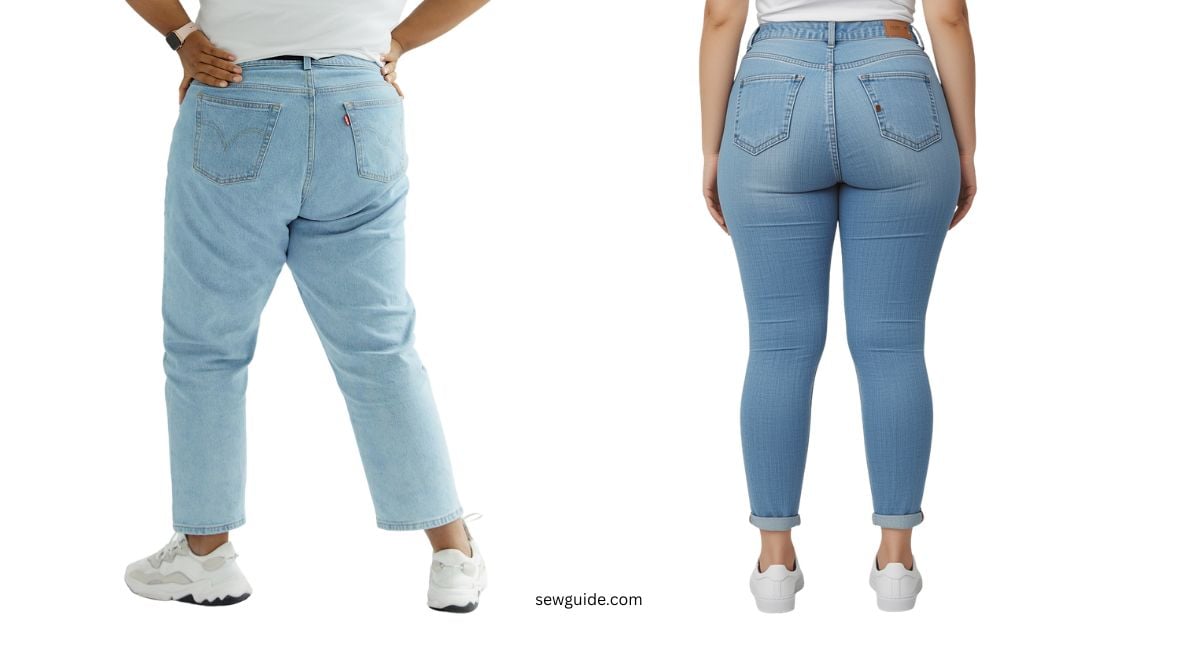
One such issue is the pants slipping down problem, aka the Plumber’s gap.
Plumber’s Gap
When you wear tight jeans, to accommodate the extra size you have at the thighs the fabric is pulled from elsewhere. This fabric is pulled down from the waistband and you have a Pants-always-down-showing-underwear issue, especially when you sit down or bend down. The fabric literally shortens vertically and others get to see your designer underwear.
If you like this effect, then don’t worry; But if you don’t, I can give you some tips to look out for about the garment construction of jeans. For someone with Thunder Thighs / Hockey Thighs, these three technical details are the difference between a garment that lasts 5 years and one that rips in 5 weeks.
Five Failure Points of Jeans for Large thighs
Low Rise of your jeans
Rise is the distance of your pants from the crotch to the top of the waistband.
Most jeans and pants are designed for a flat thigh. So when you with a bit more width than the standard wear them, you end up always wanting to pull up your pants. The pants being pulled down has a specific terminology in fashion vocabulary-The plumber’s gap..
When you have large thighs, they ‘take up’ more fabric. That fabric has to come from somewhere. If the rise is short, the thigh pulls the fabric downward from the waist.
A wide thighed person needs to wear High Rise jeans to avoid the “Plumber’s Gap
Buy Athletic jeans
An athletic jeans is a special type of jeans fit with more rear rise than normal. You can test this by measuring the rise of your regular jeans and the athletic fit one. The regular slim fit jeans will have the same front rise which is usually about 9-10 inches but on athletic pair it will be slightly longer at the back. This extra room in the back is what allows a person with hockey thighs to sit down without showing underwear
Strain on the Waistband
Not all waistbands are made equal. For those with thunderthighs the standard waistband which is rigid is the the last option. This waistband doesnt move and it will pull the pants down or dig into your stomach. Neither are outcomes you want.
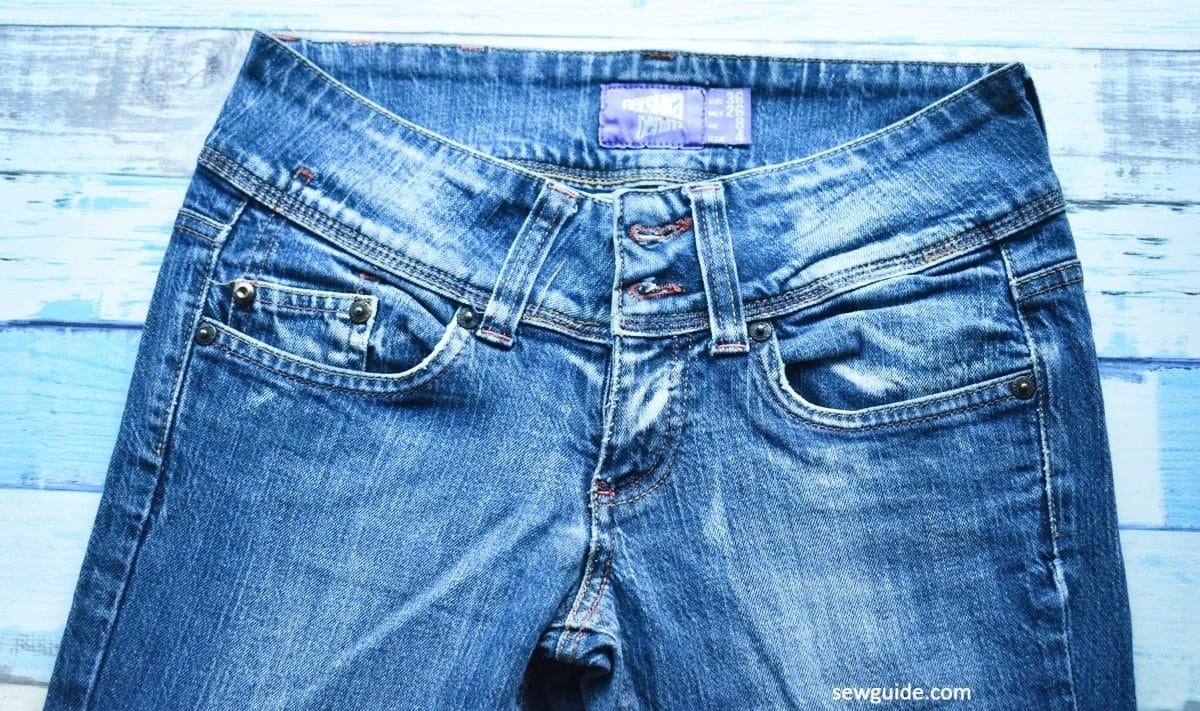
Contoured waistband
In a contoured waistband the band is curved to fit your lower back and hip bone. So it anchors the pant over your hipbone. No more pant-sliding-down.
Hollywood waistband
This is a waistband with no waistband. The waistband is not separate. No horizontal seam seperating your fabric of the pants. It hugs your waist in the most natural way, not digging into the gut unnaturally. The hollywood waistband is a continuous construction.
Elastic waistband / Drawstring waistband – this is the best option- your waistband which is adjustable / elasticised shrinks to fit your waist but also accommodates your thighs. A half elastic waistband is the bestest option. The front is flat so you have a tailored look but on the back there is enough fabric to adjust for your width
Flat Yoke of your jeans
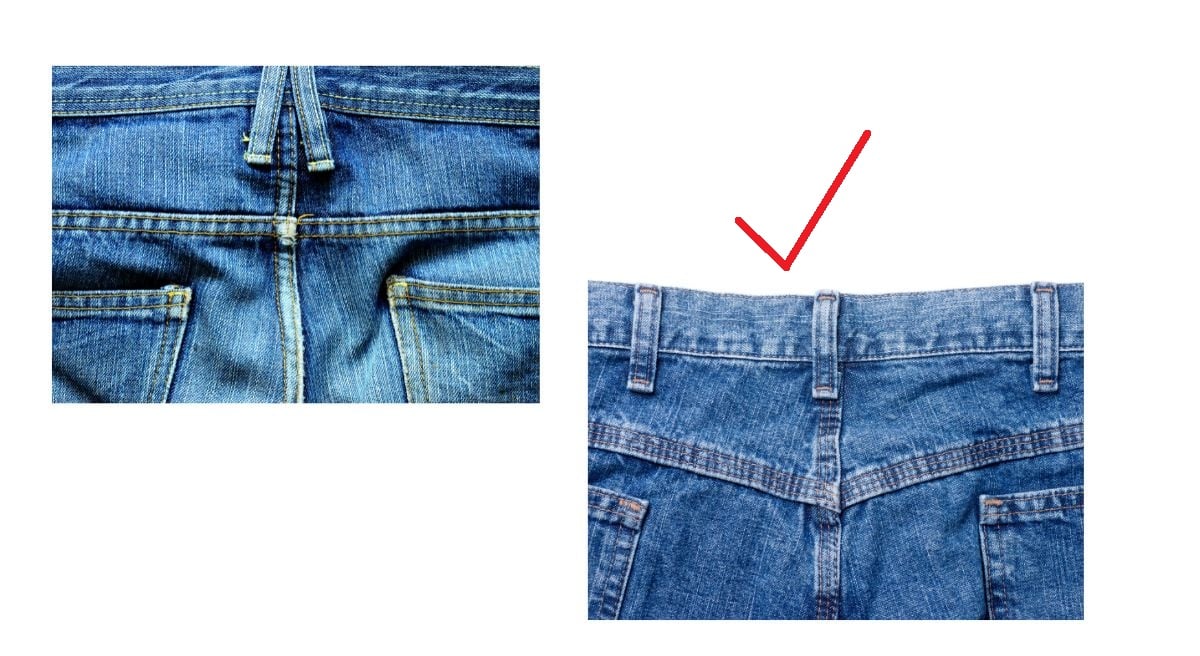
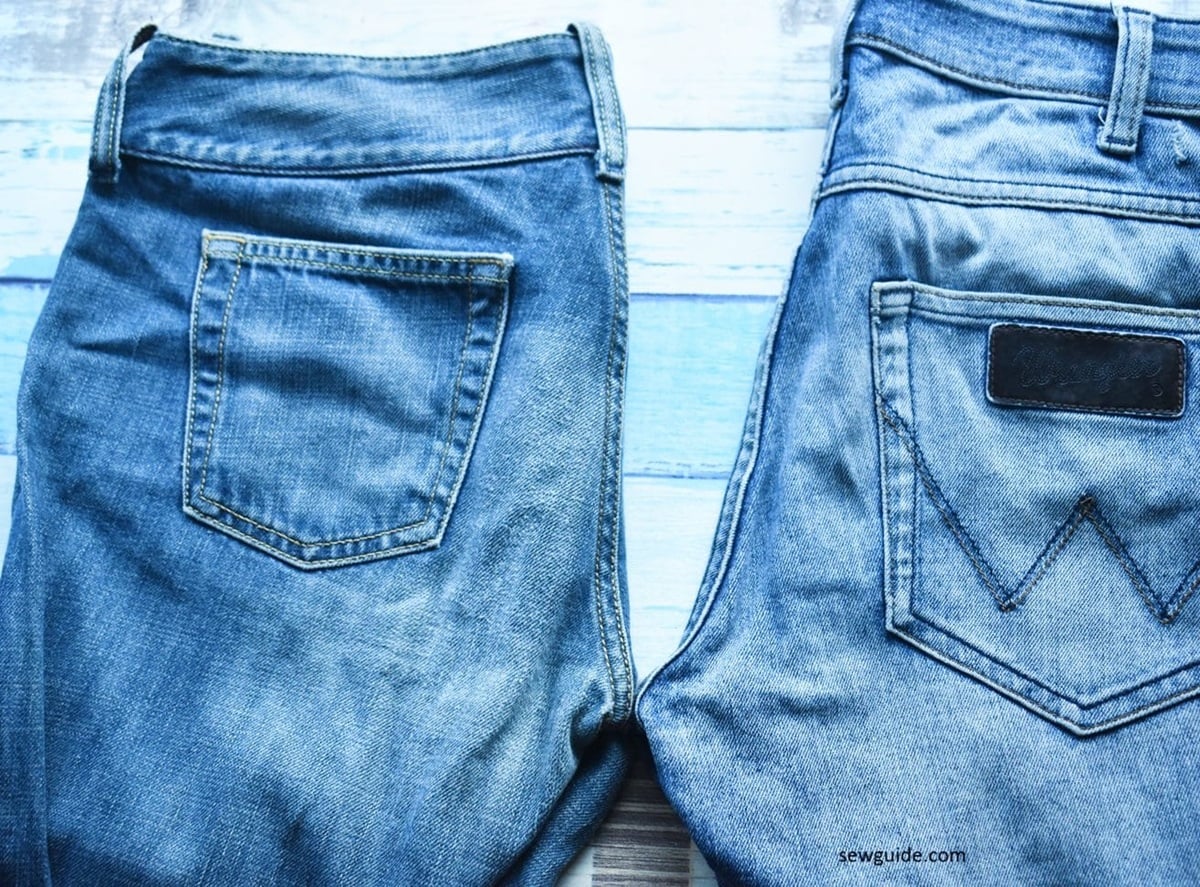
Look at the V-shaped seam at the back of your jeans (above the pockets). This is called the Yoke. You can have a flat yoke as well as v shaped yoke and a V-shaped yoke is preferred.
Always buy jeans with a deep V shaped yoke. Some jeans are there without this yoke. For anyone who wants a shapely back a yoke can give you that. But this is especially true for some one with wide thighs. A deeper, more angled yoke “adds” to the functional rise and helps the jeans shape around a muscular seat. A shapely yoke adds contour over the seat.

Crotch strain
It is the truth that thighs can destroy jeans . I am not exaggerating. Muscular legs destroy jeans. The Crotch strain is real, as well as premature seam failure. I had to repair my husbands’ jeans which ripped this way – i have explained the way I fixed those holes in this post.

But prevention is better than a cure. So most people look out for a “reinforced crotch”
Gusseted crotch
Standard pants have a “Four-Way Cross” seam in the crotch. This is a high-stress point. When big thighs move, they pull that 4-way intersection in opposite directions, causing the threads to snap . The solution for you is a gusseted crotch seam.
A Gusset is a diamond piece of fabric sewn into the crotch. It removes the “Four-Way Cross.” It disperses the stress across two or four different seams instead of one single point
If you want to add this yourself, add a diamond shaped fabric piece at the intersection instead of the single x seam. You will do your pants a favour and make it last twice as long.
Gaping Pockets
The silhouette of your pockets is as important as the other design elements. Pockets on Standard size jeans can flare out awkwardly when some one with more width along the hips wears them and this changes the silhouette of the pockets. This is most evident on pants with side seam (on-seam pockets) – the pockets gape open and they look really odd.. It is the pant version of the shirt button gaping open with the strain of the stomach.
The only solution to this is to increase the rise or to increase the hip measurement or to change the pocket placement.
Slant pockets which are cut at an angle are better. The “bias” (the angle) of the cut allows for more natural stretch. Even if your thighs are tight, the slant pocket tends to lay flatter against the body than an on-seam pocket. A forward slant pocket is the best for this
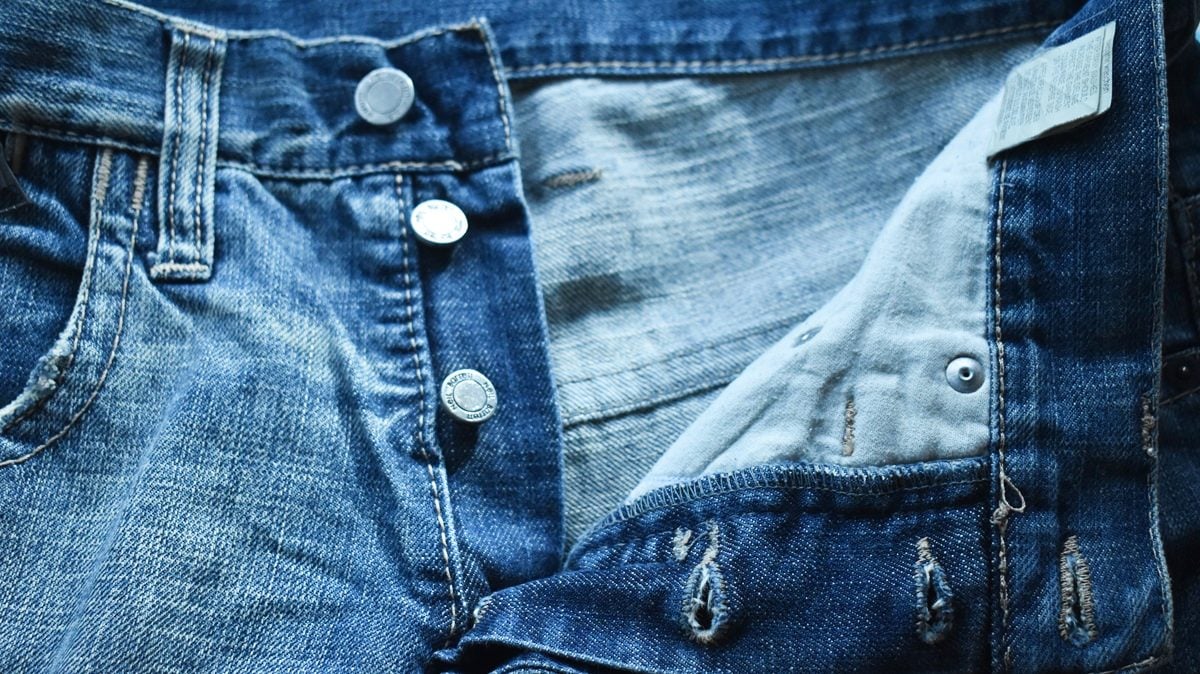
Strained Zipper fly
Zipper vs button opening
A button opening is anyday better than a zipper opening. Zipper is rigid, which is good in a way. But when the zipper doesnot stretch, it creeps down or worse breaks down. A button fly on the other hand is more accomodating.
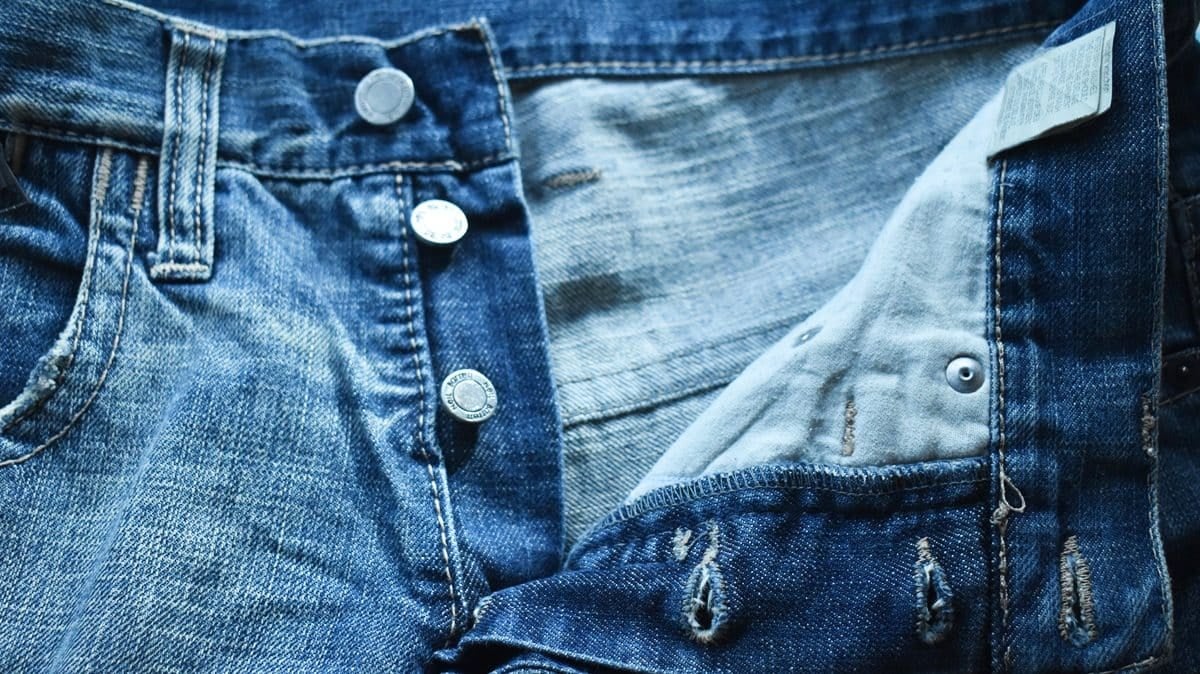
Another problem is the zipper jutting out.
Have you ever sat down in high-rise jeans with a zipper and noticed a weird, rigid “bubble” or “peak” of fabric sticking out? This happens because a long zipper track cannot fold. When you sit, the excess fabric of the high rise has to go somewhere, but the metal zipper stays straight, forcing the fabric to bulge outward.

Because buttons are individual points, the fabric in between fold between the buttons when you sit. This keeps the lap area looking much flatter and more natural. Do you want to change all your jeans zippers to buttons now?
Direction of the distressed whiskers
I do not mean to erase it. Just change the style of the whiskers. You should never have straight horizontal whiskers which stretch from the side seam to the inner area. It will widen the thigh area – at least the look of it.

The best whisker lines curve slightly downward in a “V” shape toward your inner thigh.
Slim Fit of the jeans
This is the last, but not the least important factor. You have to sew your jeans or get your jeans in a fit that is not too tight. It means there should be enough fabric volume in the seat and thigh for the jeans to “drape” slightly when you sit. The fabric isn’t under constant tension. The fit of your jeans should allow the fabric to drape naturally on your legs, which actually makes your legs look more proportional and less “bulky” in appearance.
So those ultra slim fits are out. Look out for an Athletic Taper fit in jeans, which has some extra room in the thighs but tapers near the ankle making it look shapely. If you cannot find this fit the safest bet is a straight leg jeans with a high rise.
One very common issue is the hockey stick problem.
High Thigh-to-Waist Ratio
Hockey stick problem is one in which you have large thighs relative to your waist, and you do not get jeans that fit you. This is the scenario – you have a 32″ waist but 26″ thighs (each) and now you will have to get a 34″ waist to fit your leg. In rough pseudo mathematical terms it is this – If each thigh measurement is close to three-quarters of your waist measurement, you will often struggle with standard jeans fit.

Related post: How to alter the waistband of a jeans – fix the “hole” at the back of your jeans without using a belt.
And then you end up buying pants or jeans that fit the waist but you can’t get it past your legs. Then you end up buying large waist jeans but they gape at the back. Then the only solution is to alter the waistband to make it narrow. This may not be for the sewing novice or some one with a home sewing machine that wouldn’t go past those thick jeans waistband seams.
You will have to stop going by waist measurement alone. The extra thigh circumference stretched the fabric of your jeans, and this can pull the jeans waistband downward and create waistband gaping. A contoured waistband or an elastic waistband that better fits is a solution to this.
So the final recommendation is this : Look for jeans with a higher rise (11–13″), an athletic-cut thigh, a deep rear yoke, and ideally a gusseted crotch.


Excellent feature – now I can alter my jeans