When I look at Japanese fashion styles I cannot but marvel at the individuality of all of it. Was there any other country where so many people expressed themselves through such distinct fashion identities? Perhaps – but for me, Japanese street fashion toped them all.. Japanese Fashion is and will always be the style of the youth. And they have made it their own. The quirkiness, the personality, need for self-expression, creativity, or artistic identity – everything you want in modern fashion was ( and still is to a degree) there on the streets of Harajuku and Shibuya.
Rise of Japanese fashion styles
During the golden period in Japanese stree style (a lot less today) Japanese youth reveled in dressing in fiercely individualistic style which was influenced by various subcultures prevalent in Japan.
Modern Japanese street fashion emerged during the economic boom of the 1980s. During that period rising disposable incomes allowed teenagers and young adults of Japan to spend more on clothing and experiment with personal style. These styles reflected the Japanese youth’s need to be different. Japanese fashion style included a number of pretty individualistic, uncommon and even bizarre styles that have fascinated all of us worldwide. Just open Pinterest and you will see so many boards dedicated to Japanese fashion.
Unlike traditional fashion, which often emphasized social conformity (clothing was influneced by social expectations, etiquette, and established conventions), young people began using clothing as a form of self-expression and identity. Districts such as Harajuku became gathering places for creative subcultures, while Shibuya developed its own trend-driven aesthetics, including Gyaru fashion.
When every where else in the world there were seasonal runway trends, largely driven by designers and luxury brands, in Japan there were distinct fashion “tribes” with their own silhouettes, brands, accessories, and social values. During the late 1990s and early 2000s, neighborhoods like Harajuku were internationally recognized for their extraordinary diversity of styles, from Lolita and Decora to Visual Kei and Mori Girl.
However, many of these highly individualistic subcultures declined during the 2010s. Modern Japanese youth may dress more conservatively than it once did. Economic decline and the stock market crash played its part. But that is not to say, that japanese fashion style is gone forever. Many of these styles continue to thrive through dedicated communities, independent designers, cosplay events, and fashion enthusiasts around the world.
In the Japanese language, “Kei” means “style or fashion.” As some one interested in fashion, you will be excused if you do not know all of the details about the different Japanese aesthetics like Lolita, Gyaru, Decora, Mori Girl, Fairy Kei, Visual Kei, Kogal, Ganguro, Shironuri, Cult Party Kei, Natural Kei, and Dolly Kei, but to know none of them is nothing short of fashion ignorance. Here are the most famous Japanese subculture styles
Important modern Japanese fashion styles
Lolita Kei
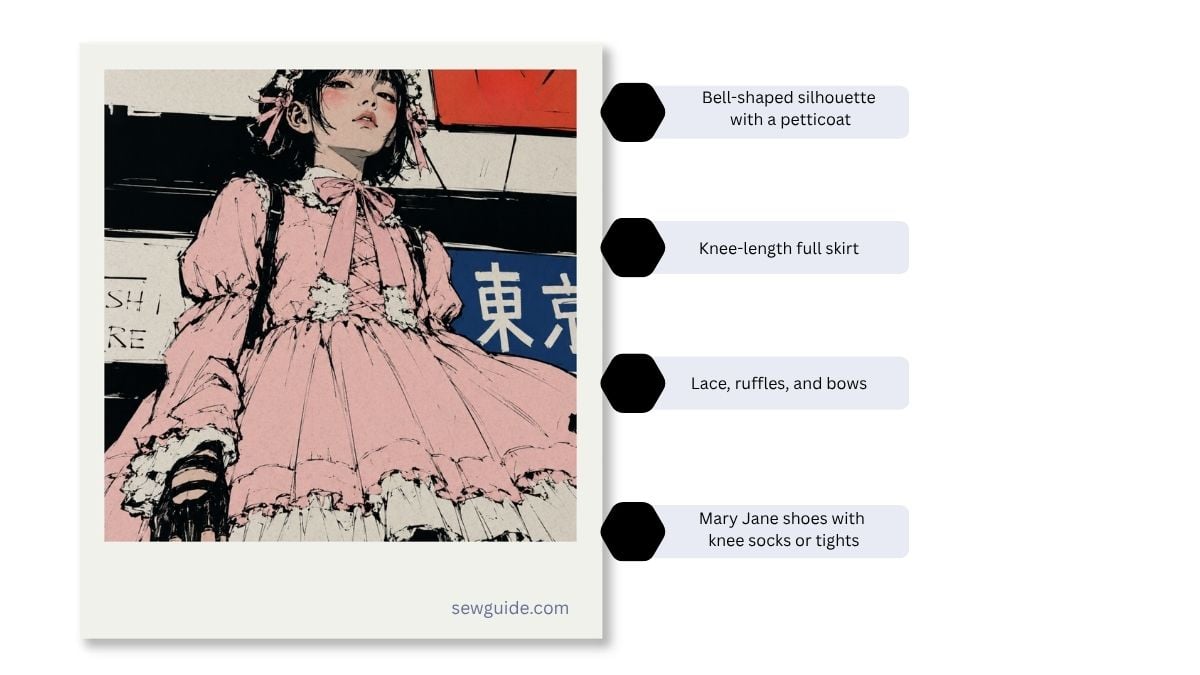
Lolita fashion is a Japanese subculture that is heavily influenced by Victorian clothing and Rococo sensitivities. The aesthetic of cuteness combined with the traditional western clothing makes up the distinctive features of Lolita fashion.
There are many substyles to this clothing subculture – Gothic lolita, Classic lolita, Casual Lolita, Ama Lolita, Hime Lolita, Kuro/Shiro lolita, Hime lolita, Ero Lolita, Sailor lolita, Pirate lolita.
In the 1990s and 2000s, this style became a popular subculture in Japan, but it may have peaked in the 2010s as this fashion style got more mainstream and gathered many followers all over the world.
The lolita wardrobe consists primarily of a blouse (long or short sleeves) paired with a skirt or dress that is usually knee-length. The fullness of the skirt, which may be A-line or bell-shaped, generated by wearing a petticoat or crinoline, is the main element of Lolita clothing style. Wigs are frequently worn by Lolitas in conjunction with other accessories, such as hair bows or bonnets. Under their petticoats, Lolitas can also wear Victorian-style drawers. Lolitas may also wear knee socks, ankle socks, or tights with either high heels or flat shoes with a bow for added effect.
Main colors of Lolita : White, black, pastel
Read more about Lolita outfit ideas here.
Kodona Style / Ouji lolita
Kodona style is for all the boys and gals who like to sport a boyish look. They’re dressed in puffy shorts and a traditional waistcoat, with their hair styled. Ouji lolita is a boyish version of the Lolita fashion style.
Decora Kei
Decora is a well-known Japanese fashion style involving bright colors and lots of accessories. Decora is short name for Decoration style. It incorporates a lot of decorations. This is a childlike and joyful style. It is more centered on the usage of accessories, themes, and color schemes than on the silhouette.
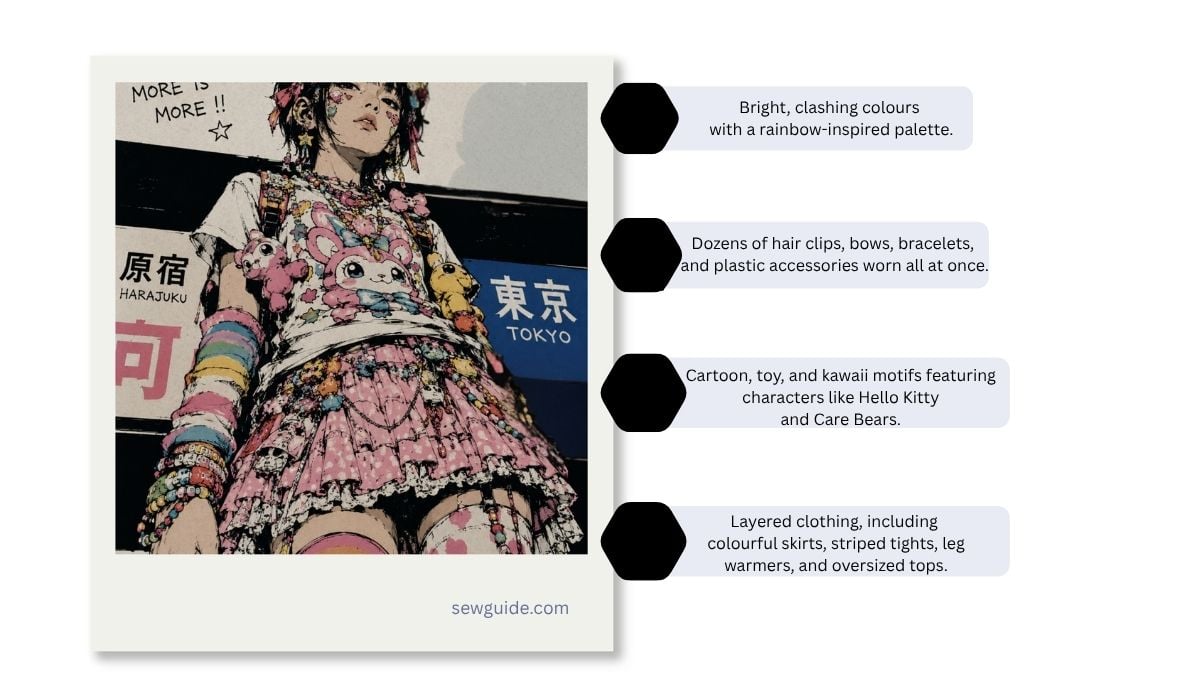
Strawberry Shortcake, Hello Kitty, Care Bears, Pokemon, and The Smurfs are just a few of the popular themes used in Decora costumes. T-shirts or hoodies featuring these motifs are popular. Legwarmers, arm warmers, and knee-high socks are also popular in the style, as are tutu skirts. To contribute to the eclectic look, Decora frequently incorporates a range of textures into one garment.
The style can be classified into substyles according to the colors used – red decora, pink decora, and rainbow decora are some examples.
Fairy Kei
Fairy Kei is a short term that translates to “Fairy style”.
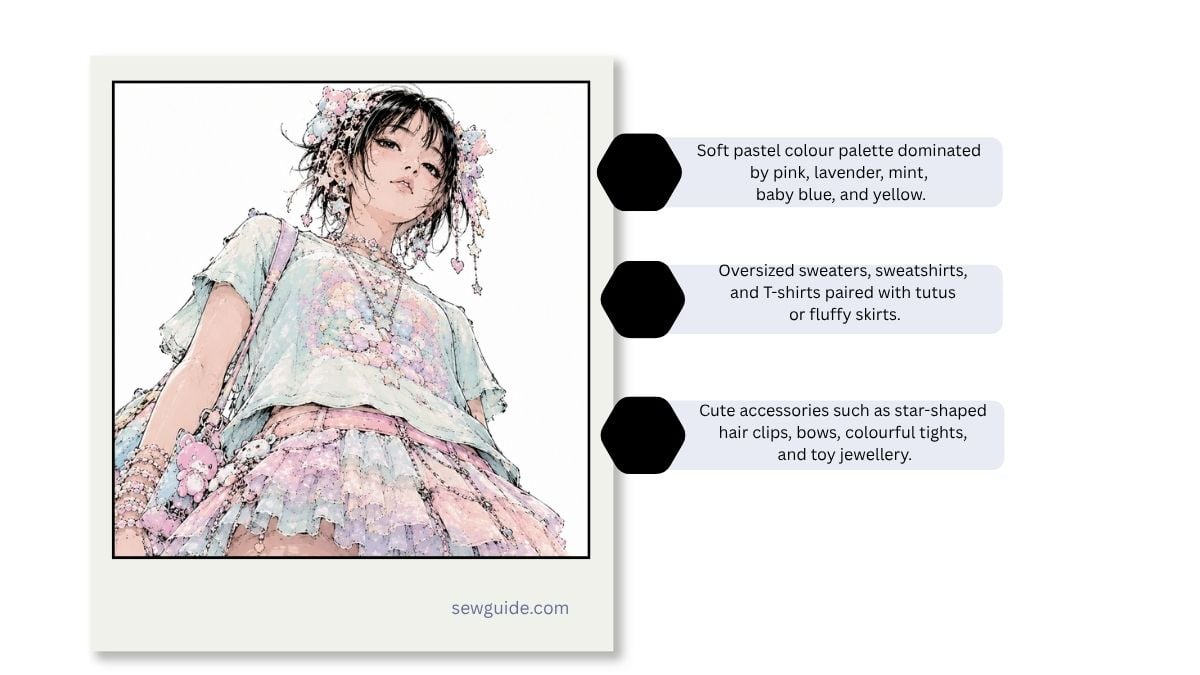
Fairy Kei is a fashion style that emerged as a result of the candy-coated pop culture of the 1980s. It is mostly focused on a Kawaii pastel style. The name relates to the pastel color scheme and charming themes that are associated with the fairy aesthetic.
Main colors of Fairy Kei : Pastel colors
Visual Kei
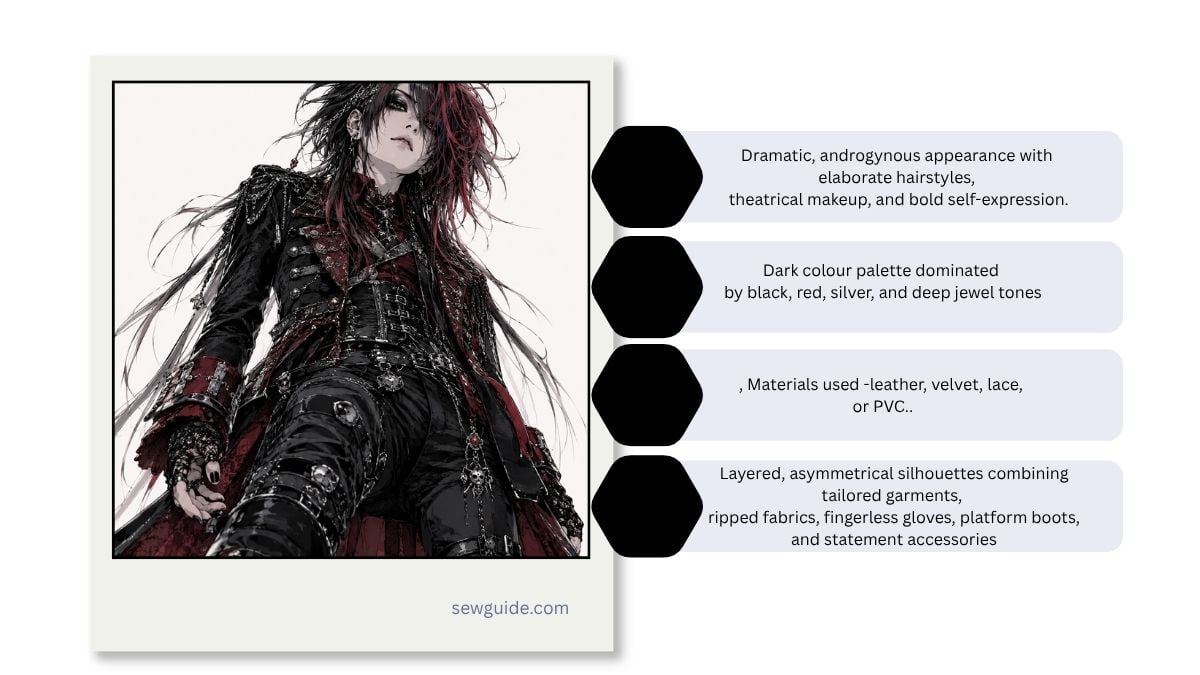
Visual Kei is a Japanese fashion style influenced by music (Visual Rock). Rock, Goth, and Punk music have influenced this aesthetic style. It was created in the late 1980s. The fashion style involves exaggerated makeup and hairstyles and androgynous clothing.
Oshara Kei
Oshare Kei is a Visual Kei substyle. The phrase Oshare means “fashionable” or ‘fashion conscious. The aesthetics gained popularity around the start of 2001. Oshare Kei, in contrast to Visual Kei’s darker tone, is all about bright colors, brightness, and cuteness.
Dolly Kei
Dolly Kei refers to a Japanese fashion style influenced by European attire and antique dolls; later iterations incorporate aspects from fairy tales, Romani culture, and peasant outfits.
To be labeled Dolly Kei, an outfit must have a vintage vibe. A dark appearance, layering, lace, embroidery, animal fur (typically artificial), and huge accessories based on frightening fairytales are additional features.
Mori Girl
Mori Girl Kei is a Japanese fashion trend that began around 2007. In Japanese, “Mori” means “forest”. Mori style is meant to convey the idea of a person who lives inside a forest. Being natural and earthy is the key. The clothing style usually involves layering at least two or three garments to form a soft and slightly billowy silhouette.
The fact that the style is typically referred to as “Mori girl” does not imply that it is only worn by women. This style appeals to many boys and even gender-neutral individuals.
Main colors of Mori Girl fashion: Earth tones
Pop Kei
Pop Kei is another vibrant Japanese fashion style that is closely linked to the Decora aesthetic and fairy kei aesthetics. The word describes how vividly colored apparel in an outfit “pops.” In this fashion style, thrifted and remade garments with cartoon characters, polka dots, and denim are used.
Otome Kei
Otome is a more moderate version of the lolita style with girls dressing in a more sedate way in more sedate colors. A maiden-like dress with a severe blouse, button-up dress or modest skirt, vest or cardigan, and underskirt made of light fabrics and layers are used.
Natural Kei
Natural Kei is a fashion trend that emphasizes large garments, natural textiles, and natural colors. The style is known for its retro aspect, as well as its emphasis on organic and natural looks. The style includes a wide range of variations.
Natural Kei apparel has a layered but simple appearance. Natural textiles, such as cotton and linen, are frequently used in outfits.
Angura Kei
The term comes from the Japanese pronunciation of the word “underground. Traditional Japanese characteristics, as well as the Showa era (1926-1989), are prominently influential in the clothing, but with a Goth twist. The makeup is usually shironuri, which is dark and thick. The followers of this style wear kimonos, but the aesthetic also incorporates adapted Japanese school uniforms.
Uchu Kei
Uchuu Kei is a substyle of fairy Kei that contains uchuu (outer space) and uchuujin (space alien) elements. Neon and cold hues are more popular, especially when combined with black, metallics, and even futuristic components.
Gayaru Kei/ Ganguro Kei
Gyaru is a translation of the English word “gal,” which means “girl.” Gyaru and its substyle ganguro involve imitating the western style of clothing with an emphasis on heightened femininity. The goal is to achieve a tanned, blond California beach girl look.
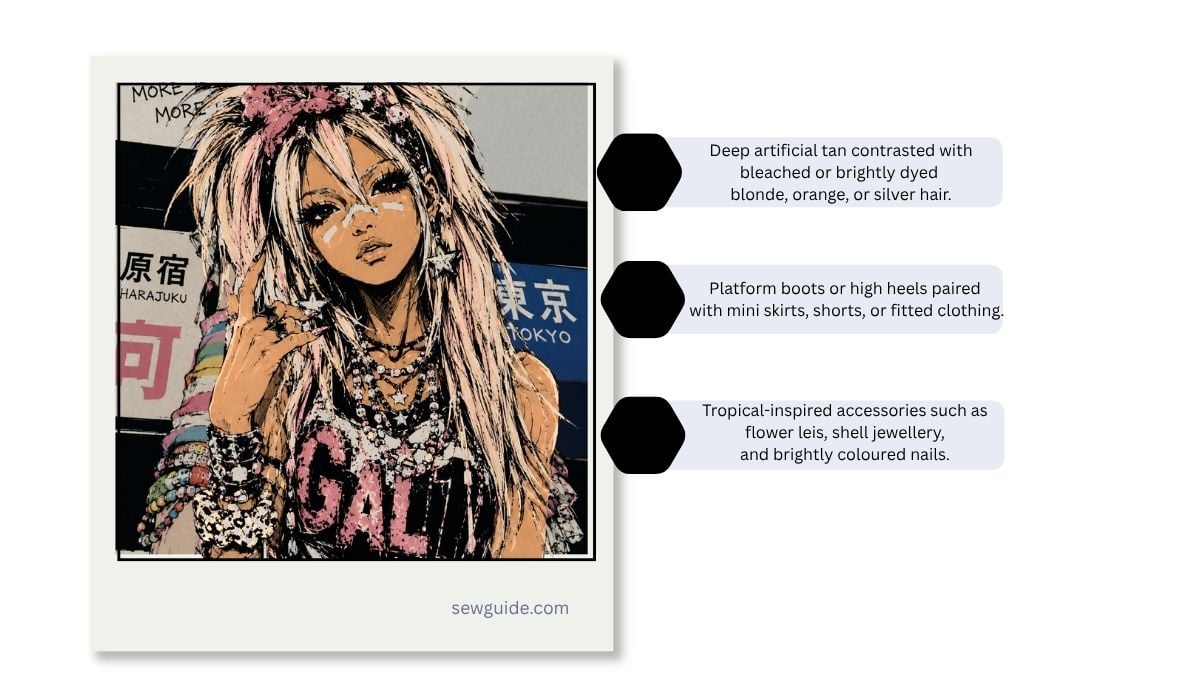
Artificial deep tan, curled bleach-blonde hair wigs or hair extensions, contact lenses that make the eyes look large, etc., are used to change the appearance to that of a very feminine western woman. This may also include the use of bronzers, black eyeliner, artificial eyelashes or eyelash extensions, as well as contouring makeup and very skimpy feminine clothes. A tan is considered essential for highlighting hair and makeup.
There are many variations of the Gyaru style. Ganguro is a more involved variation of the gyaru style. Ganguro goes against the standard of Japanese culture to have pale skin and dark hair – the basic style is bleach blond hair and a very deep tan.
Main colors of Gyaru fashion : Bright colors
Cosplay Style

This refers to dressing as a character in a costume drama. People who are very interested in the characters of anime and manga and other fictional art forms would want to look like their favorite character, and that is the origin of cosplay. In Japan, cosplay is immensely popular. Read more on what is cosplay here.
Kawaii fashion

This is an all-encompassing culture of cuteness that permeates almost all fashion styles in Japan, other than being a style on its own. Many of the symbols of kawaii aesthetics are taken from children’s toys and television shows.
Read more about Kawaii style here.
Reference : https://tokyofashion.com/spank-japanese-fashion-brand/
Centers of Japanese street fashion
Harajuku is the first name that comes to mind when you think about Japanese street fashion. Harajuku is the home of Japan’s clothing revolution. This place, refers to the area between Sendagaya and Jingumae-machi in metropolitan Tokyo, is today a globally recognized fashion powerhouse. The streets of Harajuku act as a fashion runway for the fashion-conscious Japanese youth who want to flaunt their style.
Among all the lanes of Harajuku, Takeshita Street is the most important. If you want to get the entire Harajuku experience, go to Takeshita Street, the epicenter of Harajuku street fashion. Takeshita Street, located right across Harajuku Station, is home to a mix of inexpensive clothing businesses and high-end brands like WC and Etude House.
The more upscale suburb of Omotesando is another trendy shopping location within the Harajuku region. Omotesando caters to the higher fashion elite, as opposed to Takeshita street and its surrounding regions, which focus on less-priced indie fashion items.
Additional notes : TImeline of the rise of japanese subcultures
| Period | Subculture |
|---|---|
| 1970s | Takenoko-zoku |
| 1980s | DC Brand |
| 1990s | Harajuku street fashion, Kogal (Kogyaru), Ganguro (late 1990s), Ura-Harajuku |
| 2000s | Decora, Visual Kei, Mori Girl |
Modern fashion designers of Japan
Other than the populairy of these subcultures, clothing designs of Issey Miyake, Rei Kawakubo, Yohji Yamamoto have taken Japanese fashion styles far beyond its shores.
Related posts : Traditional clothing in Japan; Fashion subcultures ; Styles in clothes
