Disclaimer first : I am not a professional fashion designer nor am I professionally trained. But I am ever curious about learning how a fashion designer operates. And from my research I have come to understand that a professional fashion designer typically needs a toolkit of specialized software rather than a single application. Not one software would do- depending on the designer and the work they do – as a student, freelancer, fashion brand or apparel manufacturer, they should use a combination.
Adobe Illustrator is the industry standard for flat sketches, technical drawings and tech packs. But there are many highly sophisticated software like tge CLO 3D and Browzwear that are widely used for realistic garment simulation. Gerber AccuMark, Lectra and TUKAcad handle industrial pattern making, grading and marker making. Creative sketching is commonly done in Procreate, Adobe Fresco or Sketchbook, and Photoshop is used for fabric repeats, print development and image editing. The ideal software combination is variable.
(But, mind you, these softwares are not the most important thing – indeed, I know of many fashion designers thriving with just the basics. These are needed for a polished professional image, optimised workflow and working at scale
I will give you the list of recommended fashion designing softwares in a table form – the most practical way. Your use case and which designing software to use.
| Your use case | The Softwares to use |
|---|---|
| Sketch fashion ideas digitally with realistic brushes and colors | Procreate (iPad), Adobe Fresco -Alternatives Sketchbook, Clip Studio Paint |
| Convert hand sketches into clean digital artwork | Adobe Illustrator -Alternatives CorelDRAW, Inkscape |
| Create technical drawings (technical flats) for manufacturers | Adobe Illustrator -Alternatives CorelDRAW, Inkscape |
| Draw flat sketches (front, back and side garment views) | Adobe Illustrator -Alternatives CorelDRAW, Inkscape |
| Draft digital sewing patterns | Gerber AccuMark, Lectra, TUKAcad -Alternatives Optitex |
| Grade patterns into multiple sizes | Gerber AccuMark, Lectra, TUKAcad -Alternatives Optitex |
| Marker making (fabric layout to reduce waste) | Gerber AccuMark, Lectra Diamino, TUKAcad -Alternatives Optitex |
| Create realistic 3D garment samples and virtual fittings | CLO 3D -Alternatives Browzwear, Optitex, Marvelous Designer |
| Test fabric drape, fit and movement before sewing | CLO 3D -Alternatives Browzwear, Marvelous Designer |
| Create garment mockups for clients or online stores | CLO 3D -Alternatives Browzwear, Photoshop, Placeit |
| Prepare Tech Packs | Adobe Illustrator -Alternatives CLO 3D, Techpacker |
| Create textile prints and surface patterns | Adobe Illustrator, Adobe Photoshop -Alternatives Affinity Designer, CorelDRAW |
| Edit fashion photographs and create lookbooks | Adobe Photoshop -Alternatives Affinity Photo, Canva |
| Digital marketing designs – Like creating social media graphics and marketing materials | Canva, Adobe photoshop, inkscape, Illustrator, Adobe express |
You will need specialized software for all of these. They can increase your creativity, improve efficiency, and streamline the design processes. Here are some of the most commonly used software tools in the fashion industry.
Software for Sketching Fashion Ideas (for Windows and ios)
The creative process of making a dress begins as an idea and then it is taken out as a rough sketch. Earlier designers used pen and paper but Digital sketching software offers a more flexible alternative to pencil and paper – so many different color combinations, brushes, layers, and editing tools. And you do not have to start from the scratch when you make a mistake – this is the most important advantage I see.
Sketchbook
Sketchbook is a simple and intuitive software tool for free hand drawing and painting and bringing your ideas to life digitally. It is very useful if you are more oriented towards hand-drawn creations.

You can use it for making initial sketches of your clothing designs. The main advantages are that it is free and very simple to use.
Procreate
Procreate is a highly popular and powerful digital painting app on the iPad – it is the next step after you use sketchbook, for most.
It has a lot of superior options when compared to sketchbook and a powerful interface that can help you create far better and more detailed fashion illustrations. Procreate has extensive color options and more advanced drawing tools. It’s features like symmetry, quick shape tools, and advanced selection are good for precision in design. It also has a very good layer management which is very essential and useful in illustrations for fashion. Brush details are more, the options are endless. You can even do animations.
It is very very popular in the fashion designing professionals and students.
The disadvantage is that it only has an ios option.
Adobe fresco
Adobe Fresco is an excellent alternative sketching tool for fashion designers.

It can be used on various iOS-based devices including iPads and iPhones as well as on all Windows devices. It has both vector and raster tools in to create detailed and scalable illustrations and use its different brushes to bring variety to your sketches.
One advantage is that it seamlessly integrates the work across different Adobe apps (like Illustrator and Photoshop)
Software for creating Flat sketches and technical drawing with Computer-Aided Design (CAD) software
Flat sketches (also called fashion flats or technical flats) are simplified front, back, and side views of a garment. Fashion designers use these to sketch out construction details, seam placement, pockets, collars, and other design features without the distraction of a fashion figure.
CAD Systems are used in fashion designing for patternmaking, digitizing, and grading. You need to convert the ideas you have or the rough hand drawn sketches you have made in your notebook into drawing that will be understood by other professionals. The sketches made in these systems convey the overall aesthetic feel of the intended garment.

AutoCAD
Though Autocad is associated with engineering works, it can also be used in fashion designing for creating precise technical drawings and patterns. It is not a common tool in the fashion design industry as it has a learning curve.
CorelDRAW
Coraldraw works similar to Adobe Illustrator. It is popular for creating detailed and intricate fashion illustrations.
Gerber AccuMark Pattern drafting software
AccuMark helps in pattern drafting, grading, and marker-making, streamlining the production process.
3-D tools in fashion designing
Fashion design often involves intricate details, textures, and 3D shapes that are difficult to be represented properly in a 2D environment. So you need some 3-D tools.
CLO 3D
This software offers 3D garment visualization. It allows designers to create realistic clothing simulations and adjust patterns and fabrics in real-time.
Lectra
Lectra is used for design, development, and prototyping in fashion. It’s particularly useful for pattern making and 3D prototyping.
Optitex
This is a digital platform that combines 2D pattern design and 3D garment visualization. With this, designers can create patterns and simulate how they would look on virtual models.
TUKAcad
An advanced pattern-making, grading, and marker-making system, TUKAcad is used for creating efficient cutting plans to minimize fabric waste.
Browzwear
This is another 3D fashion design software that enables designers to create realistic 3D models of their garments.
Marvelous Designer
This program is used for high-quality 3D garment draping and simulation. It can create realistic-looking fabric movement and textures digitally.
Software for Converting Hand Sketches into Technical Drawings (Techpacks)
Once a design has been finalized, hand-drawn sketches need to be converted into clean, accurate digital artwork. You want these professional drawings to share with pattern makers and manufacturers. Vector-based drawing software are needed for designers to create scalable illustrations with precise lines and measurements.

Tech packs are key tools in the production phase of garments. A Tech Pack is a detailed document that contains all the specifications needed to construct a garment. A tech pack typically includes a scaled-down technical drawing, or flat sketch of the garment, along with detailed notes, measurements, and production instructions like cutting, sewing, and finishing. These are given to the manufacturing team to get the design to life.
Adobe Illustrator
If you have no other software, and you are a professional fashion designer you need to get Adobe illustrator. It is the best for creating technical drawings and flat sketches. It creates detailed and precise illustrations of garments. And for this purpose and for pattern grading, it is highly valued.

You can make detailed flat representations of garments that help present your idea with all the details to pattern makers, seamstresses, and manufacturers. You can also create Line sheets, which showcase a designer’s collection with product details for buyer.
The drawing tools in this program can be used to make graphic designs, illustrations, fabric textures, patterns etc.
But that is not all. This vector based tool can be used for your marketing efforts as well. You can make your own logo from scratch using illustrator. You can integrate illustrator with other adobe programs like photoshop for all your creative digital needs.
And also use Adobe firefly for AI images – I do not know if Adobe Firefly has direct integration with Illustrator but when you subscribe to Adobe desktop apps, including Illustrator, Photoshop, Premiere Pro, After Effects, etc it includes 100 monthly generative credits for Firefly.
Difference between the CAD systems and vector based programs like Illustrator.
Illustrator is favored in fashion for creating artistic and stylized illustrations, flat sketches, and technical drawings that focus on the aesthetic aspects of a garment. CAD tools are more technical. If you want to represent the technical, construction, and production aspects of your garment you should use one of the CAD systems. They provide detailed, scaled, and precise drawings. CAD is needed to give accuracy in such drawings and also for pattern grading.
Inkscape
Inkscape is a free and open-source vector graphics editor, free being the key word here. Just like photoshop, you can use it for creating flat sketches and technical drawings of garments. This is the best option for a fashion designer on a tight budget.

You can use it to create unique patterns and prints for fabrics, make logos, labels, and other branding materials for your brand.
Related post : How to use Inkscape to create text based tshirt designs.
Clo-3D
This software is also used to make 3D-oriented Tech Packs.
Draping tools within 3D modeling software
These tools allow designers to see how the garment will move and interact with the body in real-time.
Maya
Maya offers the nCloth physics engine, which allows for realistic simulation of various fabrics, including weight, drape, and stretch.
Software for Textile Print and Surface Pattern Design
If you are a fashion designer you will be as fascinated by fabric patterns and prints as I am. And the softwares that help if you are not just sketching and hand block printing all manually the best softwares are Adobe illustrator, Coreldraw, Affinity Designer. And if you are into Artificial Intelligence you can go for Midjourney and Adobe Firefly (and Gemini and ChatGPT). Canva also has an AI interface – you checkout this tutorial to create line drawing for embroidery designs easily with Canva.
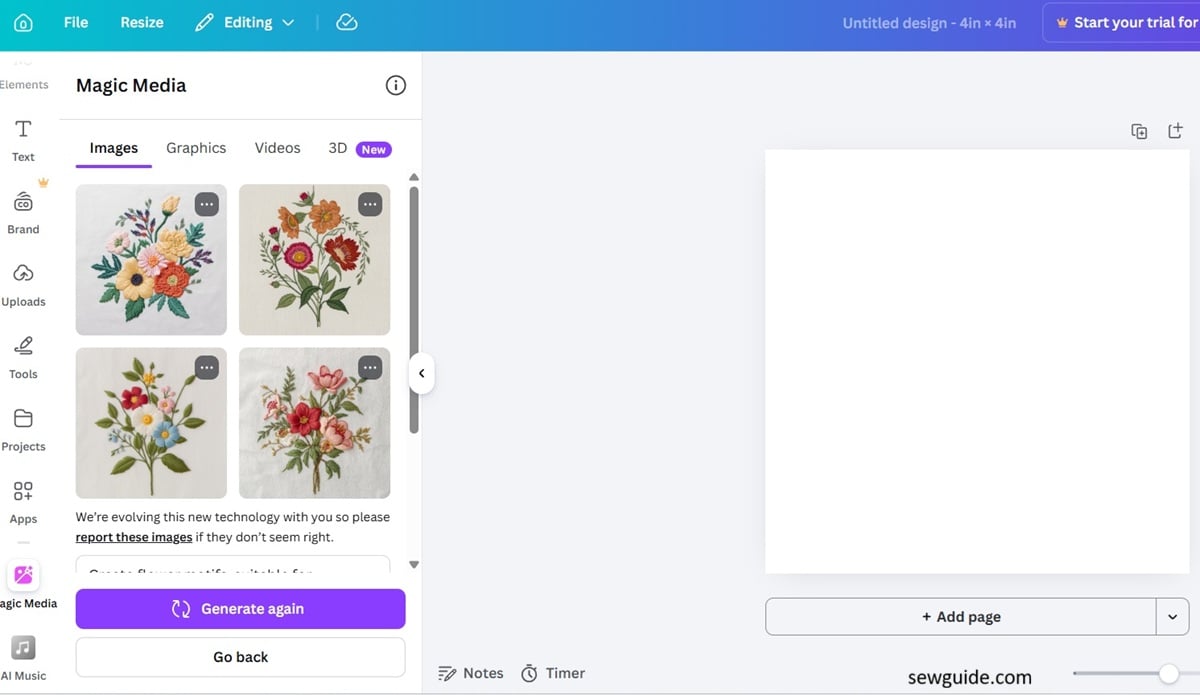
Graphic designing for fashion designing
Adobe Photoshop
Photoshop is a raster-based (or bitmap) image editing software. It is used by designers for creating and modifying digital images of fabrics, patterns, and clothing designs. Photoshop allows designers to sketch, create, and edit designs digitally.
You can experiment with different colors, patterns, and textures on your designs without making them first. You can design your own fabric patterns, adjust their colors, manipulate and change the patterns and make them unique and create seamless prints.
You can also make your fashion moodboard and lookbooks in Photoshop for inspiration as well as for formal presentation to clients. Fashion designers can make their own portfolios using Photoshop.
T shirt designers use photoshop to make creative tshirt designs as well as realistic garment mock-ups.
Canva
This is a very user-friendly software tool for making digital graphics. Today, there is no escape from social media. Everyone has to put it out there to be visible. So fashion designers who want to attract more customers have to do some kind of promotion or the other in their brand lifecycle. So, where do you make these graphics? If you just know how to open your laptop and browse, you will be able to learn Canva – it is such a simple tool.

Canva is a very user-friendly tool for creating digital graphics. Today there is no escaping from social media – not as a consumer and never as a brand. Even someone like me, a self-proclaimed and universally acknowledged introvert has to put it out there to be visible.
Fashion designers looking to attract more customers inevitably need to engage in some form of promotion throughout their brand’s life cycle. So, where do you make these essential graphics? Canva is the answer. It’s so simple to use that anyone who can open a laptop and browse the internet can learn to use it.
Simple doesnot mean that there is limit to what it can do. You can make posters, flyers, social media posts, advertisements – both digital and offline, presentations – you name it, you can make it in canva.
With these tools Designers today can either develop new patterns directly in these systems or digitize existing ones for adjustments. The designing process and the manufacturing process becomes easier and seamless.
Moreover, these systems play a crucial role in This technological advancement ensures precision and efficiency, vital in modern garment production.
Production Management Systems (PMS)
Production Management Systems are software solutions for managing the overall production process in the fashion industry. Centric PLM and PTC FlexPLM are two powerful Product Lifecycle Management (PLM) solutions used in the fashion design industry.
These systems are used in the manufacturing process of garments to track and manage materials from sourcing to production, create accurate cost estimates and optimise production planning. They can streamline sample creation, and ensure product quality throughout the production process. They can facilitate collaboration between various players across the supply chain and ensure everything runs smoothly.
Reference: Website of Centric PLM ; Website of PTC FlexPLM – https://www.ptc.com/en/industries/retail/flexplm



Although I will never use this article having retired from work, I do know and value the importance of software and the computer in the workplace. Very comprehensive and informative. I hope the young designers today take this information to use in their fashion careers. Judy Jones